How Astra 19.2°E Supports Cross-Border TV Distribution

Estimated reading time. 9 to 11 minutes.
If you have ever watched a familiar TV channel while staying in a different European country, you may have wondered how that experience feels almost the same. Behind that quiet consistency is a distribution system that rarely gets attention. Astra 19.2°E is one of the main reasons cross-border TV distribution across Europe works as smoothly as it does.
Most viewers never think about how television signals move from one country to another. They simply expect channels to appear, load quickly, and remain stable. From an engineering and broadcasting perspective, delivering that experience across borders is far from simple. It requires infrastructure that is reliable, predictable, and designed for scale.
- What cross-border TV distribution actually means
- Why satellite remains effective across borders
- The practical role of Astra 19.2°E
- Coverage footprint and real-world impact
- How broadcasters and platforms use satellite feeds
- Reliability and continuity planning
- The viewer experience behind the scenes
- Reality Check
- Final Verdict
- FAQ
What cross-border TV distribution actually means
Cross-border TV distribution is the process of delivering a television signal from one origin point to multiple countries at the same time. This could involve a single broadcaster serving different national markets or a platform distributing the same channel lineup across borders.
It is important to separate distribution from content rights. Distribution is about transport. It does not decide who can watch what. It simply ensures that the signal reaches the agreed destinations in a stable and controlled way.
In Europe, cross-border distribution is common because borders are close, languages overlap, and audiences move frequently. From broadcasters to platform operators, there is a strong incentive to centralize playout and distribute efficiently rather than rebuild delivery systems for each country.
Why satellite remains effective across borders
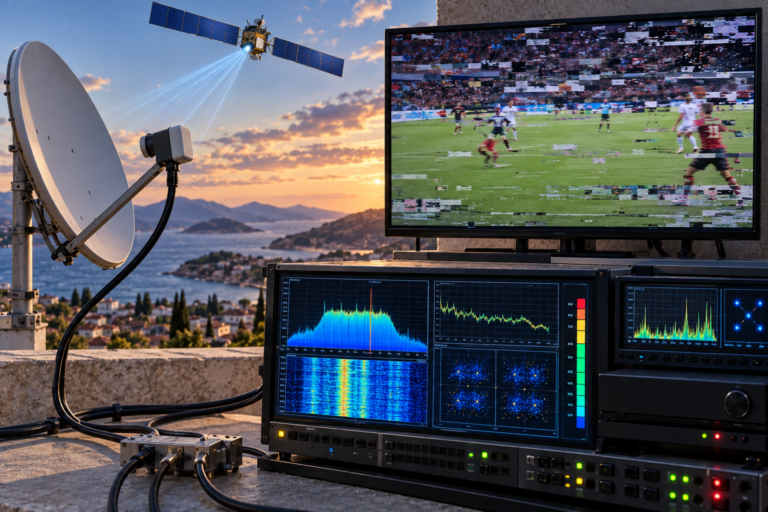
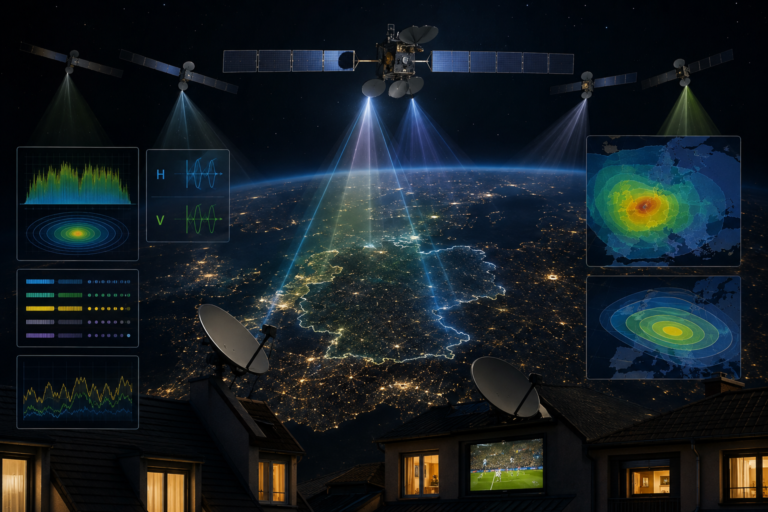
Satellite distribution solves a very specific problem. It allows one signal to be sent to many locations at the same time without depending on multiple national networks. Unlike terrestrial systems, satellites are not limited by physical borders or regional infrastructure differences.
This does not mean satellite replaces fiber or IP distribution. In practice, satellite works alongside them. For cross-border scenarios, satellite often provides a predictable baseline that operators can rely on when complexity increases.
From an operational perspective, satellite distribution reduces the number of variables. Once the uplink is stable, the same signal can be received across many markets using standardized equipment and processes.
The practical role of Astra 19.2°E
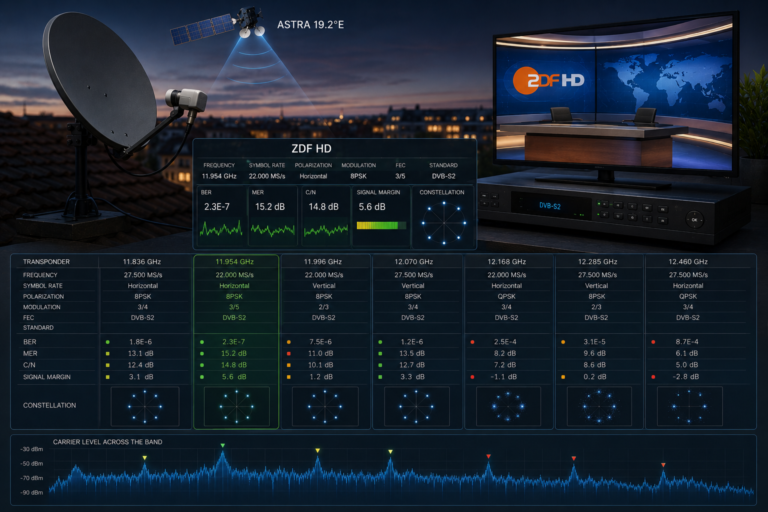
Astra 19.2°E has developed into a central distribution point for European television because of long-term adoption, technical stability, and ecosystem maturity. Over time, broadcasters, platforms, and manufacturers aligned their workflows around this orbital position.
That alignment matters more than it may appear. Installers know how to target it. Operators design channel lineups around it. Equipment vendors optimize receivers for it. All of this reduces friction in cross-border delivery.
Instead of constantly adapting to new parameters, broadcasters can focus on content and operations while relying on a familiar distribution backbone.
Coverage footprint and real-world impact
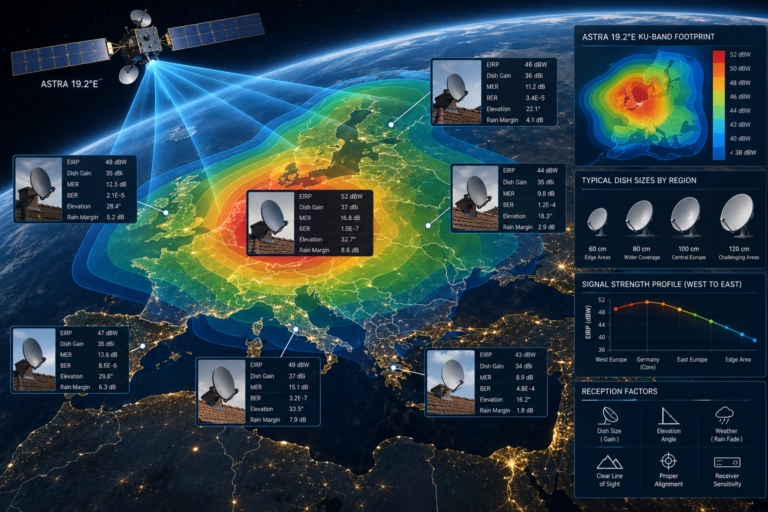
A satellite footprint defines where a signal can be received reliably. For cross-border distribution, a balanced footprint allows similar reception conditions across multiple countries.
This consistency simplifies planning. Platforms know what dish sizes and reception conditions to expect. Broadcasters know their signals will perform similarly across regions.
The result is fewer exceptions, fewer special cases, and a more uniform service across borders.
How broadcasters and platforms use satellite feeds
Most cross-border distribution is not direct to homes. Satellite feeds are often received at professional headends, where they are integrated into cable, IPTV, or hybrid networks.
This approach allows platforms to maintain local control while relying on a shared distribution source. It also improves resilience, since headends are built with redundancy and monitoring in mind.
By using satellite as an intake layer, operators can scale to new markets without redesigning the entire distribution architecture.
Reliability and continuity planning
Cross-border distribution must work under pressure. Major events, breaking news, and peak viewing periods expose weaknesses quickly.
Satellite distribution is often included as part of continuity planning. Whether used as a primary path or as backup, it provides an independent delivery route that complements terrestrial networks.
This layered approach improves overall system resilience and reduces the risk of widespread outages.
The viewer experience behind the scenes
Viewers rarely notice distribution unless something goes wrong. When satellite distribution works well, it disappears into the background.
Consistency across borders helps viewers feel at home, even when watching TV from another country. Channels load predictably, quality remains stable, and scheduling feels familiar.
That experience is the result of careful engineering and long-term infrastructure planning, not coincidence.
Reality Check
Satellite coverage does not override broadcasting rights or regulations. Cross-border distribution still requires legal agreements and compliance in each market.
Reception quality can vary due to local installation, equipment quality, and environmental factors. Satellite provides the backbone, but local conditions still matter.
Final Verdict
Astra 19.2°E supports cross-border TV distribution by offering a stable, scalable, and familiar infrastructure across Europe. Its value lies in predictability, not control over content.
As long as broadcasters need to deliver signals efficiently across borders, Astra 19.2°E will continue to play a central role in European television distribution.
FAQ
Is Astra 19.2°E used only for direct-to-home TV?
No. A large portion of its use is professional distribution to headends and platforms, not just home reception.
Does satellite distribution bypass national regulations?
No. All distribution must comply with licensing, rights agreements, and national broadcasting rules.
Why not use only fiber or IP networks?
Fiber and IP are important, but satellite adds independence, redundancy, and one-to-many efficiency in cross-border scenarios.
Do viewers need special equipment?
Requirements depend on the platform. Many viewers receive satellite-fed channels through cable or IPTV without realizing it.
Will satellite remain relevant in the future?
Yes. While delivery models evolve, satellite continues to serve as a reliable backbone for large-scale distribution.