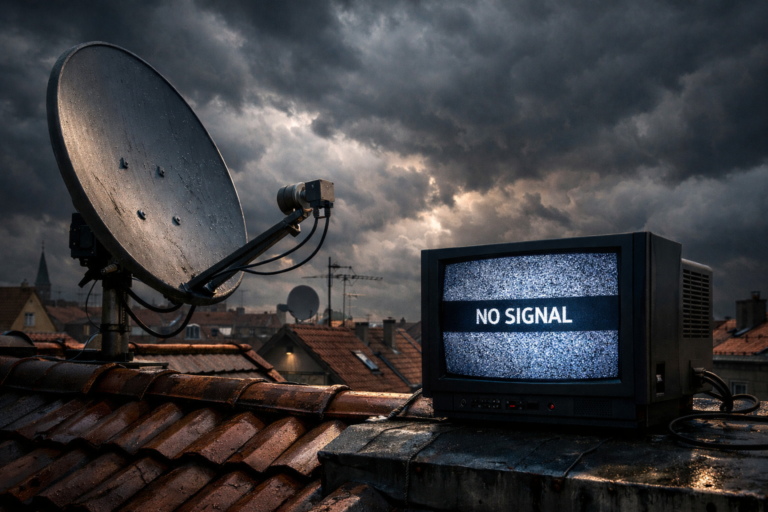
Why Astra 19.2°E Became Europe’s TV Standard
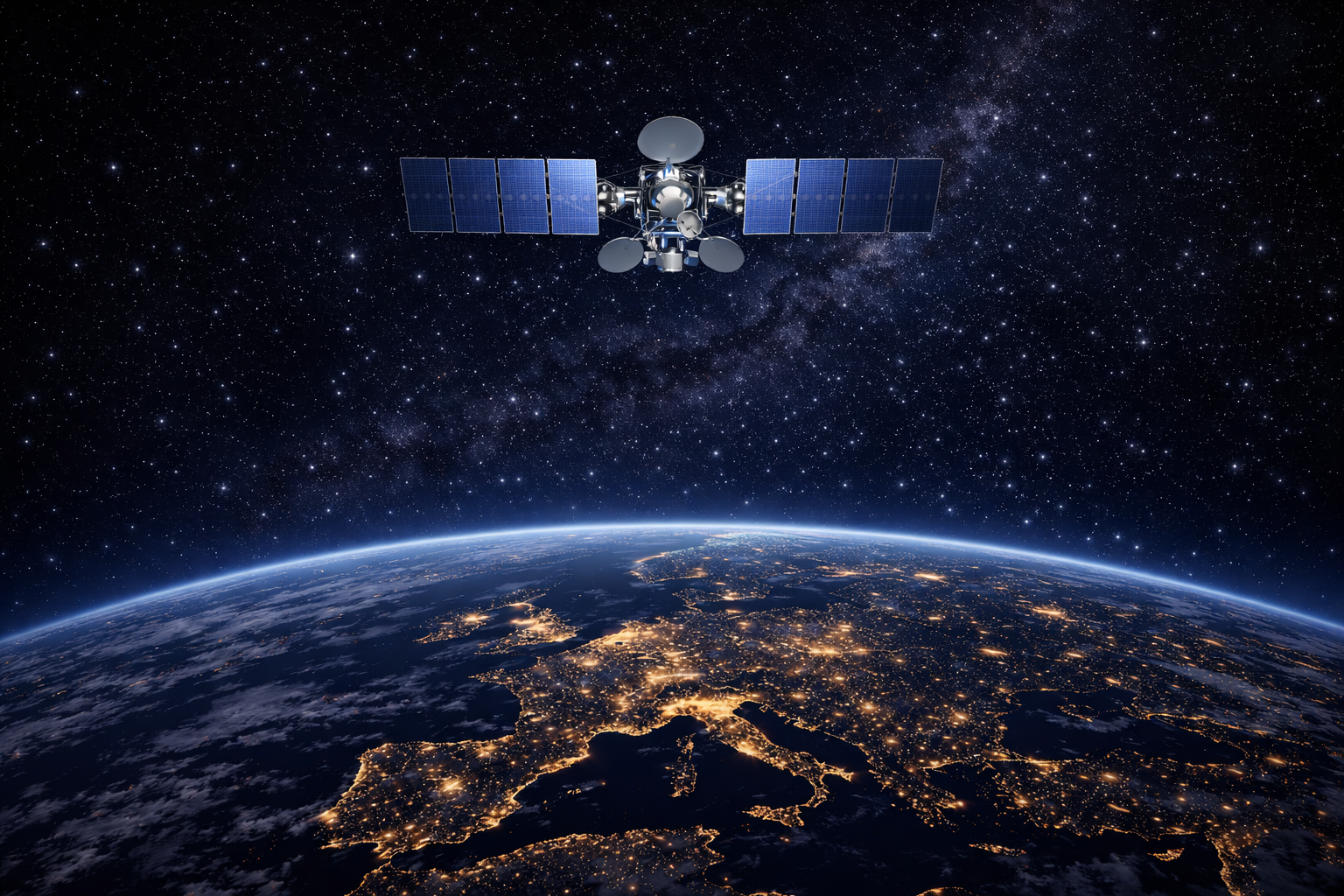
Estimated reading time. 9 to 11 minutes.
In European television, some technical choices quietly turn into long term habits. Viewers rarely notice them, but broadcasters build entire systems around them. Astra 19.2°E is one of those choices. Over time, it moved from being just another satellite position to becoming the reference point for television distribution across much of Europe.
This did not happen overnight. Astra 19.2°E did not become a standard because it was declared one. It became a standard because broadcasters, platforms, installers, and manufacturers repeatedly chose it, year after year, until it became the most familiar option in the market.
- What it means for a satellite to become a TV standard
- Early adoption and first mover advantage
- The power of a growing installed base
- Alignment across the broadcasting industry
- Viewer familiarity and everyday usage
- Technical stability over time
- The ecosystem effect
- How the market reinforced the standard
- Reality Check
- Final Verdict
- FAQ
What it means for a satellite to become a TV standard
A technical standard is not always defined by regulation or formal agreement. In many cases, a standard emerges because it becomes the most practical and widely accepted option.
In television distribution, a standard satellite position is one that most stakeholders design around by default. Installers expect it. Broadcasters plan for it. Equipment manufacturers support it without special configuration.
Once a position reaches that level of acceptance, switching away from it becomes increasingly difficult.
Early adoption and first mover advantage
One of the key reasons Astra 19.2°E gained momentum was early adoption. When satellite television expanded in Europe, Astra positioned itself at a time when demand was growing rapidly.
Early broadcasters that chose Astra 19.2°E benefited from wide reach and relatively simple distribution. As more channels followed, the position gained credibility.
First mover advantage matters in broadcasting. Early choices influence future ones, especially when infrastructure investments are involved.
The power of a growing installed base
As more households installed dishes aligned to Astra 19.2°E, the installed base grew. That growth created momentum.
Once millions of homes are pointed at the same satellite position, content providers have a strong incentive to place channels there. Doing so ensures immediate reach without additional installation effort.
This feedback loop reinforced Astra 19.2°E as the default choice.
Alignment across the broadcasting industry
Standards form when different parts of an industry align. In the case of Astra 19.2°E, broadcasters, platform operators, and hardware manufacturers gradually aligned their workflows.
Receivers were optimized for it. Installation guides referenced it. Channel lists were built around it.
This alignment reduced friction and encouraged consistency across markets.
Viewer familiarity and everyday usage
Viewers may not know orbital positions, but they recognize stable experiences. When channels appear consistently and predictably, trust forms.
Astra 19.2°E became associated with reliability. Viewers traveling across Europe often encountered the same channel environments.
That familiarity reinforced the perception of a shared television space.
Technical stability over time
Technical stability plays a major role in standard formation. Astra 19.2°E offered predictable signal behavior and long term continuity.
Broadcasters value platforms that do not require constant adjustment. Stability reduces operational stress.
Over time, this reliability built confidence across the industry.
The ecosystem effect
Once a satellite position becomes central, an ecosystem develops around it. Training materials, support services, and operational knowledge accumulate.
This ecosystem lowers barriers for new entrants and simplifies expansion.
The result is a self sustaining standard that is difficult to displace.
How the market reinforced the standard
Market behavior reinforced Astra 19.2°E at every level. Channels wanted access to the largest audience. Platforms wanted efficient distribution. Installers wanted simple setups.
Each group made decisions that favored the same position.
Over time, alternatives existed, but none offered enough benefit to overcome the weight of the existing standard.
Reality Check
Becoming a standard does not mean exclusivity. Other satellite positions continue to serve important roles.
Standards can evolve if market conditions change significantly.
Final Verdict
Astra 19.2°E became Europe’s TV standard through gradual adoption, industry alignment, and long term stability.
Its status was earned through consistent use rather than formal declaration, making it one of the most deeply embedded elements of European television infrastructure.
FAQ
Was Astra 19.2°E officially declared a standard?
No. It became a standard through widespread and repeated use.
Could another satellite position replace it?
Only if it offered a clear and sustained advantage across the entire ecosystem.
Do viewers need to understand satellite positions?
No. The standard exists to make the experience simple for viewers.
Is Astra 19.2°E still growing?
Its role is stable, supported by long term infrastructure and usage.
Does being a standard limit innovation?
Not necessarily. Stable standards often enable innovation by reducing uncertainty.