Astra 19.2 Signal Strength Guide
Estimated reading time: 22 minutes.
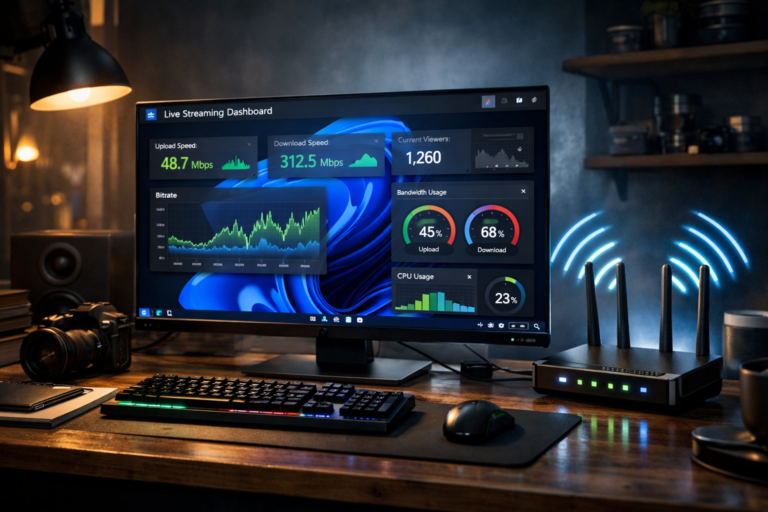
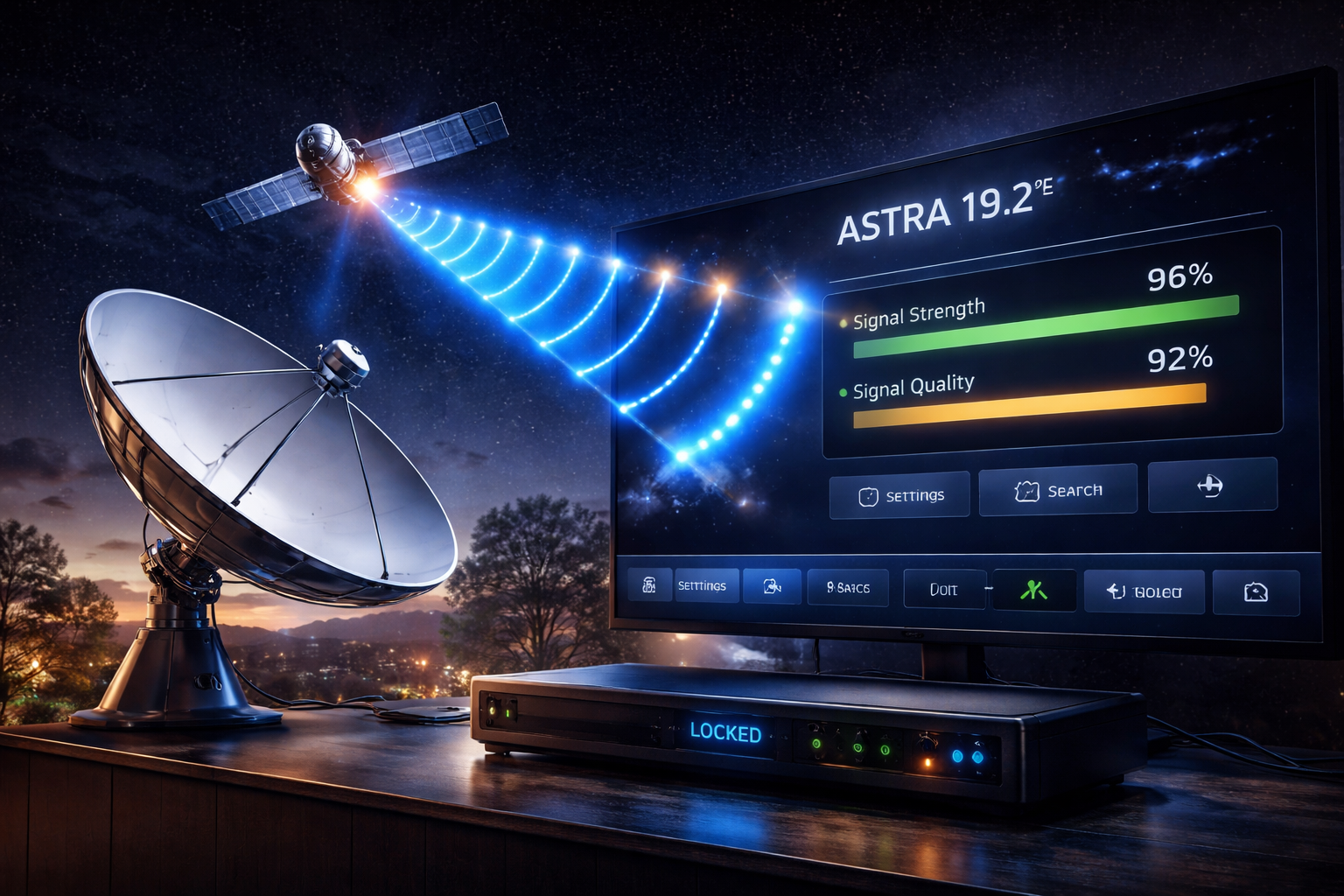
When setting up a satellite system for Astra 19.2, most users focus on one number shown on the receiver screen. Signal strength. It looks simple, usually displayed as a percentage or bar, and many assume that higher is always better. But in reality, signal strength alone does not tell the full story of your reception quality.
Satellite reception depends on a combination of physical alignment, electronic processing, and environmental conditions. A strong signal does not always mean a stable picture, and a moderate signal can still deliver perfect viewing if it is clean and consistent. Understanding how Astra 19.2 signal strength works is the key to diagnosing and improving reception.
Quick Context
This guide explains how Astra 19.2 signal strength works including dish alignment signal quality LNB positioning cable integrity and environmental factors affecting satellite reception.
- What signal strength actually means
- Signal strength vs signal quality
- Dish alignment and signal capture
- LNB positioning and signal focus
- Cable integrity and signal loss
- Environmental impact on signal strength
- Weather and atmospheric effects
- Receiver interpretation of signal levels
- How to optimize Astra signal strength
- Diagnosing weak or unstable signals
- Signal strength scenarios
- Reality Check
- Final Verdict
- Frequently Asked Questions
What signal strength actually means
Signal strength refers to the power level of the satellite signal received by your dish and passed to the receiver. It measures how much of the transmitted signal is being captured.
This value does not indicate whether the signal is usable. It only shows how strong the incoming signal is at a physical level.
A high signal strength reading means your dish is receiving a strong signal, but it does not guarantee correct decoding.
This is why signal strength must always be considered alongside signal quality.
Signal strength vs signal quality
Signal quality measures how clean and error free the received signal is. It reflects how well the receiver can decode the data stream.
You can have high signal strength but low quality if the signal is distorted or misaligned.
Conversely, moderate strength with high quality often results in perfect viewing.
For Astra 19.2 reception, quality is usually more important than raw strength.
Dish alignment and signal capture
The satellite dish must be aligned precisely toward the Astra 19.2 orbital position. Even small deviations can reduce signal quality significantly.
The dish works by reflecting incoming signals toward the LNB. If alignment is incorrect, the signal is not focused properly.
This reduces both strength and quality.
Accurate alignment is the foundation of stable reception.
LNB positioning and signal focus
The LNB sits at the focal point of the dish and converts the signal into a usable frequency.
Its position and angle are critical. If the LNB is slightly off center, signal focus is reduced.
The skew angle must also match the satellite polarization.
Correct LNB setup improves both signal strength and quality.
Cable integrity and signal loss
Signals travel from the dish to the receiver through coaxial cables. These cables must maintain signal integrity.
Damaged or poorly connected cables can reduce signal strength and introduce noise.
Long cable runs may also cause signal attenuation.
High quality cables and connectors are essential for reliable reception.
Environmental impact on signal strength
Satellite signals require a clear line of sight. Physical obstacles such as buildings or trees can block or weaken the signal.
Even small obstructions can affect reception.
Seasonal changes like growing foliage can introduce new signal problems.
Maintaining a clear path improves signal stability.
Weather and atmospheric effects
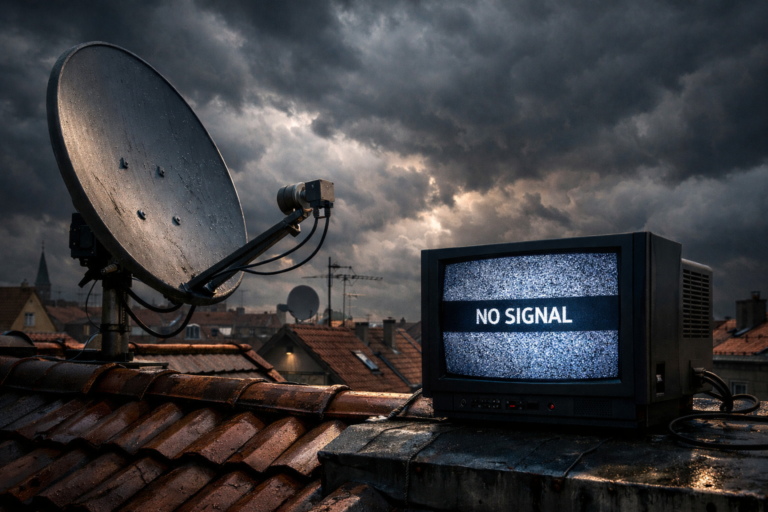
Weather conditions can affect signal strength. Heavy rain, snow, or thick clouds can absorb or scatter the signal.
This phenomenon is known as rain fade.
During severe weather, signal strength may drop temporarily.
Once conditions improve, signal levels usually return to normal.
Receiver interpretation of signal levels
Receivers display signal strength as a percentage or bar. However, this value is not standardized across devices.
Different receivers may interpret signal levels differently.
This means a reading of seventy percent on one device may not equal the same value on another.
Understanding this helps avoid confusion when comparing readings.
How to optimize Astra signal strength
Optimizing signal strength involves careful adjustment of dish position, LNB alignment, and cable connections.
Small adjustments can lead to significant improvements.
Monitoring signal quality while adjusting is more effective than focusing only on strength.
The goal is to achieve stable and clean reception.
Diagnosing weak or unstable signals
If signal strength is low, check dish alignment and cable connections first.
If strength is high but quality is low, alignment or LNB issues are likely.
If signal fluctuates, environmental or weather factors may be involved.
Systematic checks help identify the root cause.
Signal strength scenarios
| Scenario | Cause | Explanation |
|---|---|---|
| High strength low quality | Misalignment | Signal not focused correctly |
| Low strength and low quality | Poor reception | Weak signal capture |
| Fluctuating signal | Environmental factors | Obstruction or weather impact |
| Stable moderate signal | Good alignment | Clean and consistent reception |
Reality Check
High signal strength alone does not guarantee good reception. Signal quality, alignment, and system configuration are equally important for stable Astra viewing.
Final Verdict
Final Verdict
Astra 19.2 signal strength is only one part of the reception equation. While it indicates how much signal is being received, it does not guarantee usable data. Proper dish alignment, correct LNB positioning, clean cabling, and favorable environmental conditions all contribute to stable and reliable reception. By focusing on both signal strength and quality, users can achieve consistent satellite performance and avoid common reception issues.
Frequently Asked Questions
| Question | Answer |
|---|---|
| Is higher signal strength always better | Not necessarily. Signal quality is more important for stable viewing. |
| Why is my signal strong but picture unstable | This usually indicates poor signal quality due to misalignment. |
| Can weather affect Astra signal | Yes heavy rain or snow can temporarily reduce signal strength. |
| How to improve signal strength | Adjust dish alignment check cables and ensure clear line of sight. |