Astra 19.2 Signal Strength Guide 2026
Estimated reading time: 16 minutes.
Satellite reception depends heavily on signal strength and signal quality. When viewers receive German television channels from Astra 19.2 the stability of the signal determines whether the picture remains clear and uninterrupted.
Although modern satellite technology is highly reliable many reception issues occur because of weak signal levels. Understanding how signal strength works helps households maintain stable reception and avoid common viewing interruptions.
Quick Context
This guide explains how Astra 19.2 signal strength works in home satellite installations and what factors influence the quality of German television reception.
- What satellite signal strength means
- Difference between signal strength and signal quality
- How dish alignment affects signal levels
- Cable quality and signal loss
- Weather impact on satellite reception
- Receiver indicators and signal measurement
- Typical Astra signal ranges
- Reality Check
- Final Verdict
- Frequently Asked Questions
What satellite signal strength means
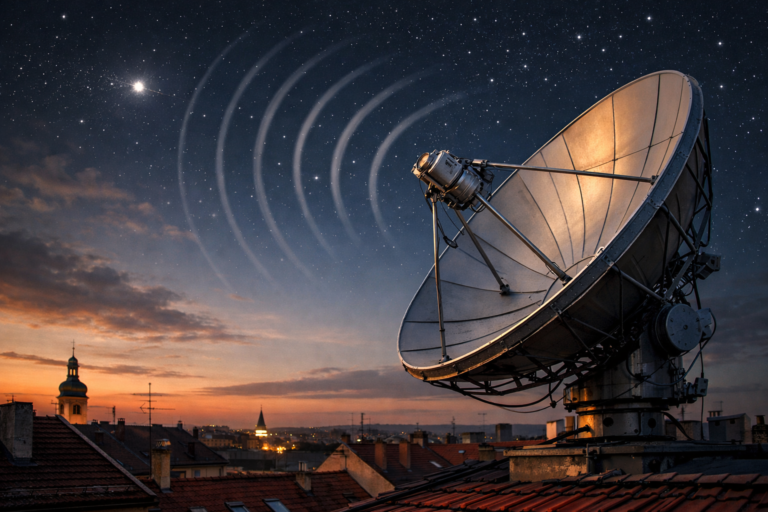
Satellite signal strength refers to the power level of the signal received by the dish from the satellite. The signal originates from transmitters located on the satellite and travels thousands of kilometers before reaching the dish.
Once the signal reaches the dish it is reflected toward the LNB mounted at the focal point. The LNB converts the signal into a lower frequency that can travel through the cable to the receiver.
If the signal strength is high enough the receiver can decode the digital broadcast and display the television channel without interruptions.
When signal levels drop too low the receiver may struggle to decode the data stream which can result in picture freezing audio loss or missing channels.
Difference between signal strength and signal quality
Many satellite receivers display two indicators called signal strength and signal quality. Although these values appear similar they measure different aspects of the signal.
Signal strength measures how powerful the incoming signal is. Signal quality measures how accurately the receiver can decode the digital data within that signal.
It is possible to have high signal strength but low signal quality if interference or alignment issues affect the transmission.
For stable reception both indicators should remain within acceptable ranges.
How dish alignment affects signal levels
Dish alignment plays a major role in satellite reception. The dish must be pointed precisely toward the Astra orbital position to collect the maximum signal power.
Even small alignment errors can reduce signal quality. When the dish is slightly off target the signal reflected toward the LNB becomes weaker.
Professional installers typically use signal meters or receiver indicators to adjust the dish until the strongest signal is achieved.
Once aligned correctly the dish usually maintains stable reception for many years.
Cable quality and signal loss
The coaxial cable connecting the dish to the receiver plays a critical role in maintaining signal strength. Low quality cables or damaged connectors can cause signal loss during transmission.
Long cable runs may also reduce signal levels if the cable is not properly shielded.
Using high quality coaxial cables helps preserve the signal and ensures the receiver receives a stable data stream.
Properly installed connectors also prevent interference from external electrical sources.
Weather impact on satellite reception
Satellite signals generally remain stable during normal weather conditions. However heavy rain snow or dense clouds can temporarily weaken the signal.
This phenomenon is often called rain fade. During intense storms the signal may drop below the threshold required for stable decoding.
Once weather conditions improve the signal usually returns to normal without requiring any adjustment to the installation.
Larger dishes can help reduce weather related signal loss because they capture more signal energy from the satellite.
Receiver indicators and signal measurement
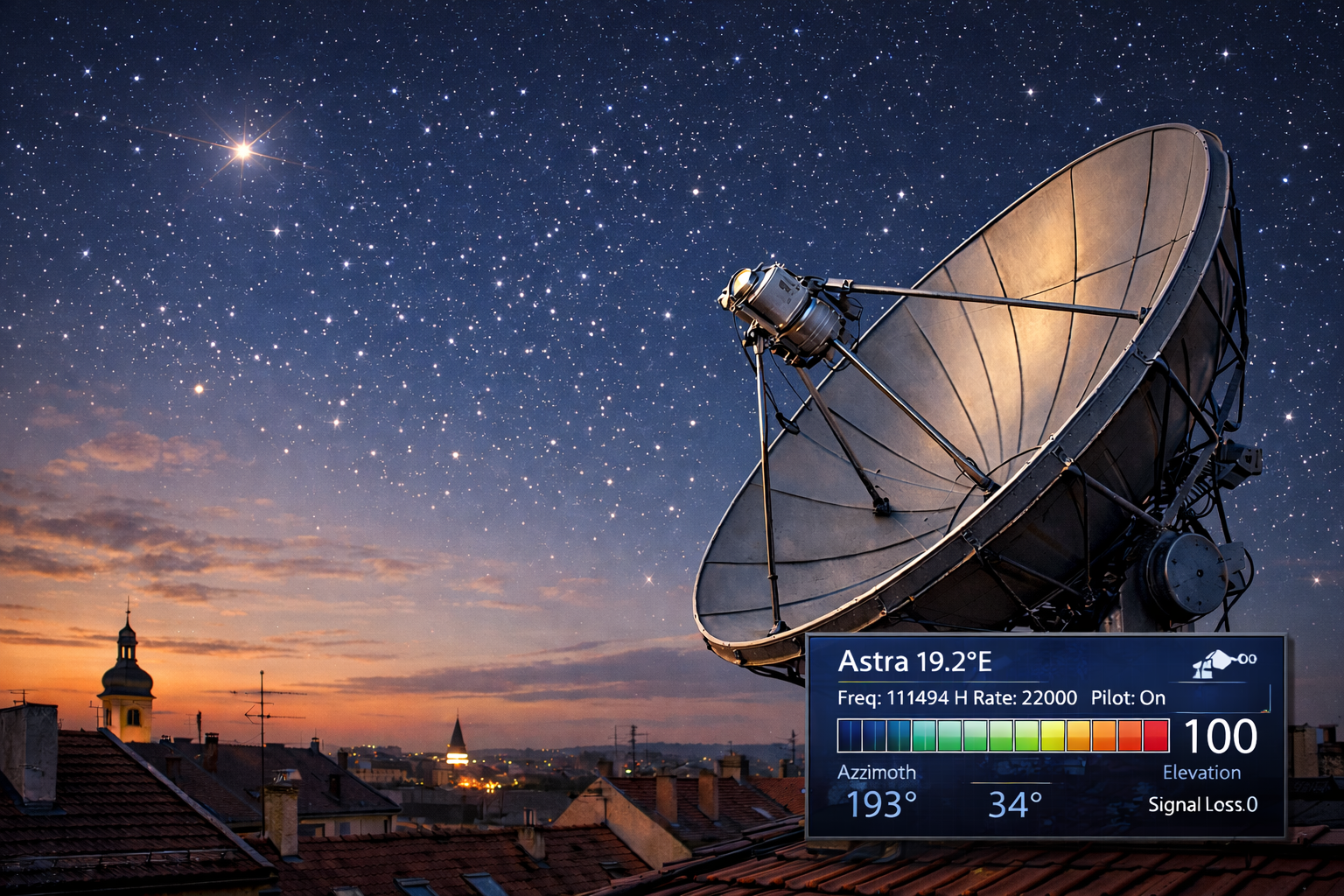
Most satellite receivers include signal monitoring tools that display signal strength and quality in real time. These indicators help installers fine tune the dish alignment.
While adjusting the dish the installer watches the signal meter and slowly moves the dish until the receiver shows the highest possible signal level.
These indicators are also useful for diagnosing reception issues. If signal levels drop suddenly it may indicate a cable problem dish movement or environmental obstruction.
Regularly checking signal indicators helps ensure stable long term reception.
Typical Astra signal ranges
| Signal level | Reception quality | Viewer experience |
|---|---|---|
| High signal | Excellent decoding | Stable picture and sound |
| Moderate signal | Acceptable reception | Minor fluctuations possible |
| Low signal | Unstable decoding | Picture freezing or glitches |
| Very weak signal | Signal loss | No channel reception |
Reality Check
Most Astra reception issues are related to local installation factors such as dish alignment cable quality or environmental interference rather than problems with the satellite broadcast itself.
Final Verdict
Final Verdict
Maintaining strong signal levels is essential for stable Astra 19.2 reception. Proper dish alignment high quality cables and routine system checks allow households to receive German television channels reliably for long periods.
Frequently Asked Questions
| Question | Answer |
|---|---|
| What signal strength is needed for Astra reception | Most receivers require moderate to strong signal levels for stable decoding of satellite broadcasts. |
| Why does the signal drop during storms | Heavy rain or snow can temporarily weaken satellite signals causing short reception interruptions. |
| Can cable quality affect signal strength | Yes poor quality or damaged cables may cause signal loss between the dish and receiver. |
| How can I improve Astra signal reception | Improving dish alignment using quality cables and ensuring a clear view of the satellite helps maintain strong signal levels. |