Austria Entertainment Channels 2026 Evening Relaxation Habits
Estimated reading time: 13 minutes.
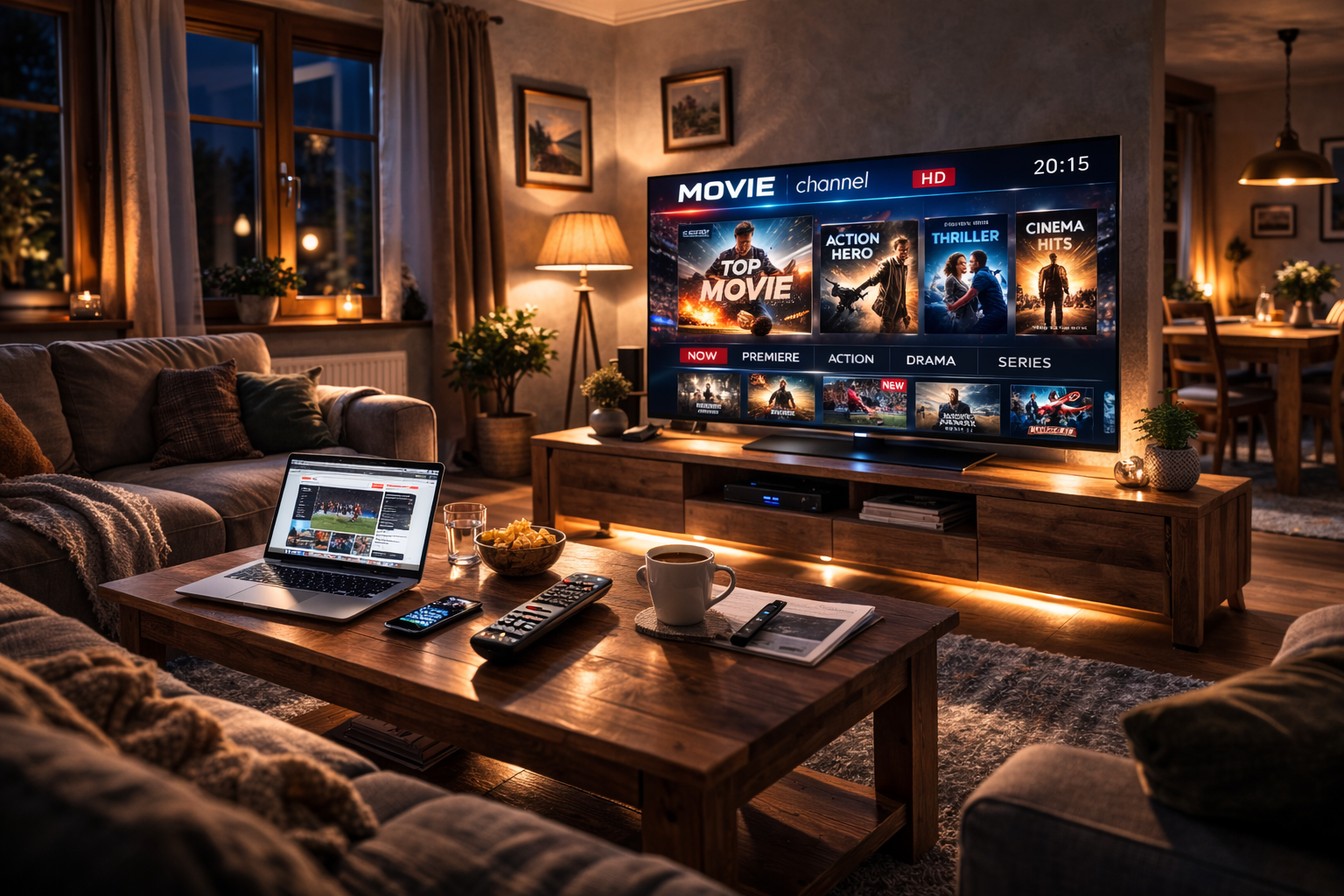
In Austria in 2026, the evening hours represent a natural shift from productivity to relaxation. After a full day of work, commuting, and daily responsibilities, many viewers turn to entertainment channels as their main way to unwind.
This evening relaxation habit is not random. It connects closely with how people already use television as a calm background companion during the day. In fact, many of these patterns mirror the way viewers experience passive viewing on sports channels in Austria, where the screen becomes part of the home atmosphere rather than a demanding activity.
Quick Context
This article explores how Austrian households in 2026 use entertainment channels in the evening to relax, reduce stress, and transition into personal time.
- The transition from work mode to relaxation
- Why entertainment TV creates comfort
- Evening prime time viewing patterns
- How viewers choose evening content
- Light attention and relaxed engagement
- Daily evening routines with TV
- Emotional reset and mood balance
- Evening relaxation behavior pattern
- Reality Check
- Final Verdict
- Frequently Asked Questions
The transition from work mode to relaxation
The evening period marks a clear mental transition. Viewers move from structured tasks to flexible and comfortable activities.
Turning on entertainment TV is often the first step in that transition.
Why entertainment TV creates comfort
Familiar shows, movies, and light programs provide a predictable and calming experience. Viewers do not need to make complex decisions or stay fully focused.
This sense of familiarity helps reduce mental fatigue.
Evening prime time viewing patterns
Prime time in Austria in 2026 typically starts after dinner. This is when households settle down and begin longer viewing sessions.
Entertainment channels become the center of attention during this period.
How viewers choose evening content
Most viewers do not search extensively for content. They choose from familiar channels or programs they already know.
This reduces decision fatigue at the end of the day.
Light attention and relaxed engagement
Evening viewing is often relaxed and flexible. Viewers may watch while eating, talking, or checking their phones.
Attention is present but not intense.
Daily evening routines with TV
Many households develop fixed evening habits. For example, watching a movie on certain days or following a weekly show.
These routines create structure and comfort.
Emotional reset and mood balance
Entertainment TV helps viewers reset emotionally after a busy day. It provides humor, storytelling, and distraction from stress.
This emotional benefit is one of the main reasons viewers return every evening.
Evening relaxation habits in Austria 2026
| Evening phase | Viewer behavior | Attention level |
|---|---|---|
| After work | Turning on TV to relax | Low to medium |
| Dinner time | Watching while eating | Medium attention |
| Prime time | Focused viewing of movies or shows | Medium to high |
| Late evening | Light background viewing | Low attention |
Reality Check
Evening entertainment viewing in Austria in 2026 is a stable and predictable routine. It supports relaxation, emotional balance, and the transition into personal time.
Final Verdict
Final Verdict
Austria entertainment channels in 2026 play a key role in evening relaxation. They offer a low effort, emotionally satisfying way for viewers to unwind and end the day. This habit remains a core part of daily home life.
Frequently Asked Questions
| Question | Answer |
|---|---|
| Why do viewers watch entertainment TV in the evening | To relax and reduce stress after daily responsibilities. |
| Is evening viewing always focused | No, it often includes light attention and multitasking. |
| Do households follow routines for evening TV | Yes, many homes have regular viewing schedules for movies or shows. |
| Does entertainment TV help with emotional balance | Yes, it provides distraction and positive mood support. |