Czech Evening TV Routines 2026
Estimated reading time: 13 minutes.
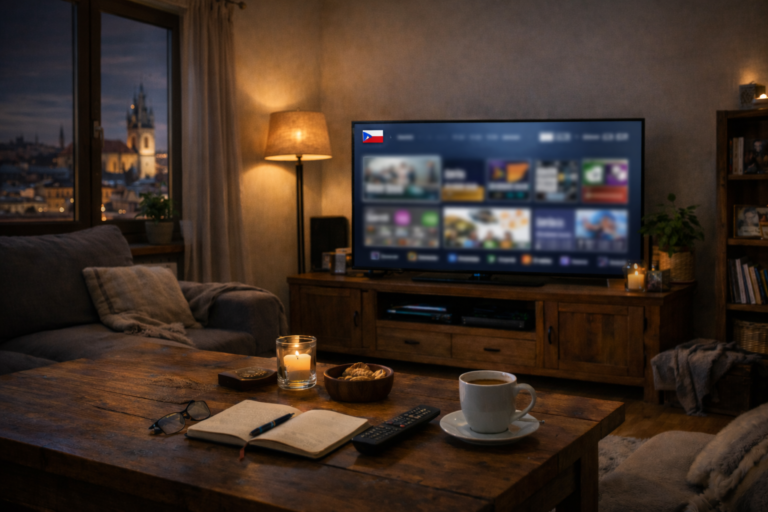
In Czech homes in 2026, the evening is the most stable TV moment of the day. After work, school, and daily responsibilities, households naturally shift into a slower and calmer rhythm. Turning on the TV is usually the first step in that transition.
These evening routines are not random. They follow clear patterns shaped by comfort, shared space, and low effort decisions. Many of these habits reflect the same behavior described in how viewers in Prague use TV channels in 2026, where the screen becomes part of the home atmosphere rather than the center of attention.
Quick Context
This article explains how Czech households use TV in the evening in 2026, focusing on routines, shared viewing habits, background TV, and prime time behavior.
The transition from daytime to evening
The evening begins with a clear mental shift. People move from structured tasks into flexible personal time.
Turning on the TV helps signal that the active part of the day is over. The screen introduces a slower rhythm and a sense of relaxation.
Background TV at the start of the evening
In many homes, TV starts as background sound. It runs while people change clothes, prepare food, or check their phones.
This early evening phase is low attention and highly routine. The content choice is quick and familiar.
Dinner time viewing habits
During dinner, the TV remains on but attention is shared. Families talk, eat, and watch at the same time.
Content that is easy to follow works best here because it does not require full concentration.
Prime time household patterns
After dinner, the evening moves into its most focused phase. This is when households settle into longer viewing sessions.
Even during prime time, attention is flexible. People may still use phones or talk while watching.
How families choose evening content
Most families do not explore many channels. They choose from a small set of familiar options.
The goal is to avoid conflict and keep the environment calm. The best choice is usually the easiest one.
Decision fatigue and routine choices
After a full day, mental energy is limited. Decision fatigue leads people to repeat the same choices.
Familiar channels feel comfortable because they require no effort to understand.
Evening TV routine in Czech homes 2026
| Evening phase | Viewer behavior | Attention level |
|---|---|---|
| After work | TV turned on for background atmosphere | Low |
| Dinner time | Shared viewing while eating | Medium |
| Prime time | Longer relaxed viewing session | Medium to high |
| Late evening | Quiet passive viewing | Low |
Reality Check
Evening TV routines in Czech homes are highly stable. Most households follow similar patterns every day, shaped by comfort, shared space, and low effort decisions.
Final Verdict
Final Verdict
Czech evening TV routines in 2026 are built around relaxation and simplicity. Background viewing, familiar choices, and flexible attention define how households use TV at the end of the day.
Frequently Asked Questions
| Question | Answer |
|---|---|
| Do Czech families watch TV every evening | Yes, evening viewing is the most common daily TV habit. |
| Is TV watched actively during dinner | Not fully, attention is shared between conversation and the screen. |
| Why do households choose familiar channels | To reduce decision effort and maintain a calm atmosphere. |
| What happens during late evening viewing | TV becomes background sound as people relax or prepare for sleep. |