English TV in Austria 2026 Background Viewing Habits
Estimated reading time: 14 minutes.
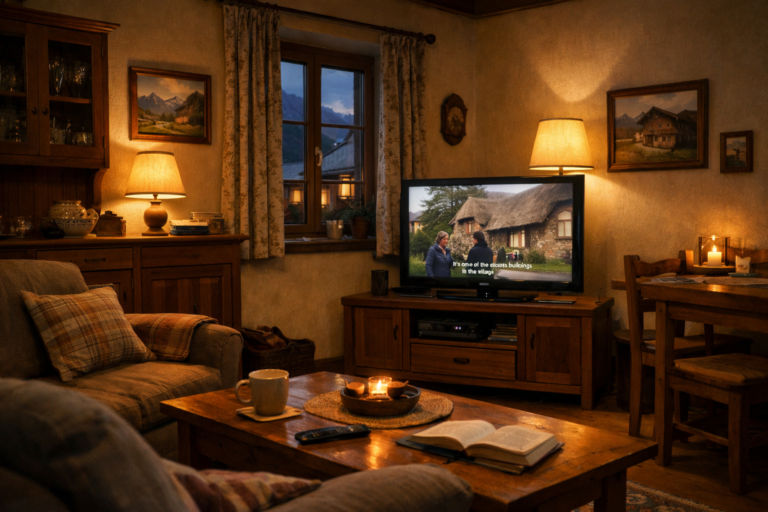
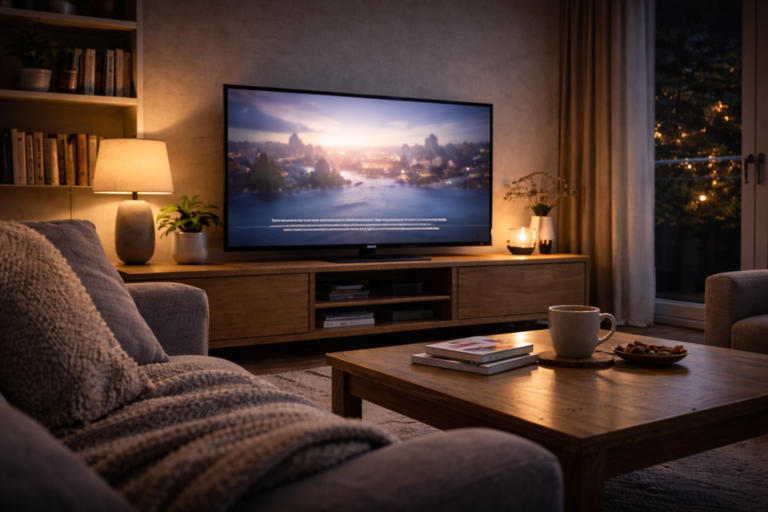
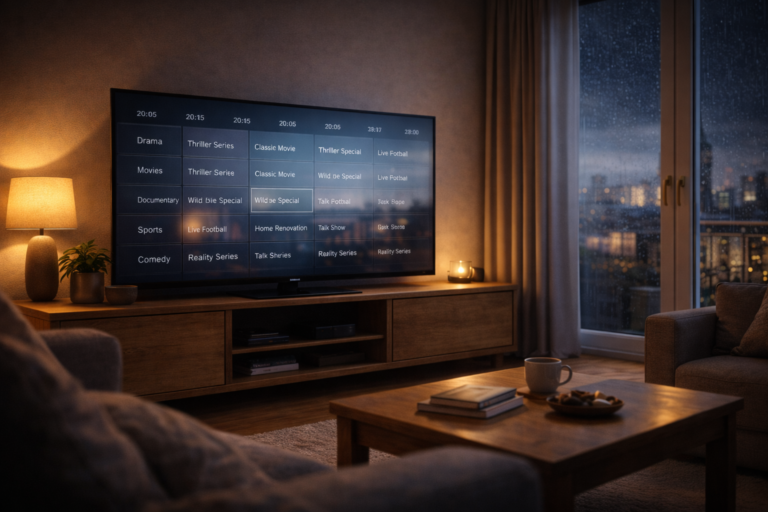
Background viewing is one of the strongest TV habits in Austria in 2026. The television is not always watched directly. It lives in the room. It fills the silence while people cook, clean, work, and relax.
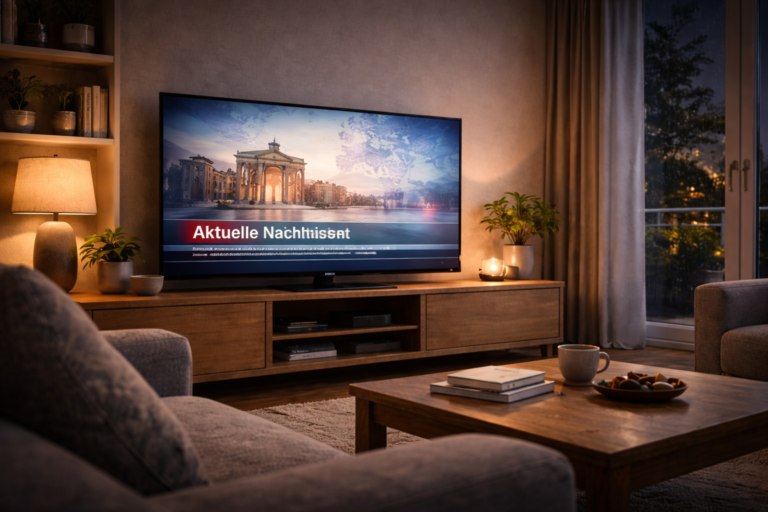
English TV channels have become a key part of this habit. Not because viewers are fully focused. But because the sound, rhythm, and familiarity fit daily life without effort.
Quick Context
This article explains how background viewing works in Austrian homes in 2026 and why English TV channels are often used as a steady companion throughout the day.
- What background viewing really means
- Why background TV is so common in Austria
- How background viewing fits into daily routines
- The role of sound and room atmosphere
- Partial attention and easy re entry viewing
- Habit building through repetition
- Multitasking and passive watching
- Common background viewing patterns
- Reality Check
- Final Verdict
- Frequently Asked Questions
What background viewing really means
Background viewing is not about watching closely. It is about having the TV present while life continues.
In many Austrian homes, the TV is on even when nobody is looking directly at it. People listen, glance, and move on. This creates a relaxed and natural relationship with the screen.
Why background TV is so common in Austria
Modern routines are busy. People do many things at the same time. Cooking, messaging, working, organizing the home.
Background TV fills the quiet spaces between these tasks. It gives the room a steady rhythm and removes the feeling of silence.
How background viewing fits into daily routines
Background viewing appears at specific times in the day. Morning preparation. Midday chores. Early evening cooking.
English TV channels fit these routines because they are easy to follow without constant attention.
The role of sound and room atmosphere
One of the most important parts of background viewing is sound. Not loud, not distracting, but steady.
English TV channels provide a consistent tone that makes the room feel active without becoming stressful.
Partial attention and easy re entry viewing
In background viewing, attention is partial. Viewers check in for a moment, then return to their tasks.
English TV works well because it allows easy re entry. You can look away and come back without losing track.
Habit building through repetition
When the same type of content plays during the same part of the day, it becomes a habit. The brain expects it.
This repetition is what turns English TV into a daily routine inside Austrian homes.
Multitasking and passive watching
Most background viewing happens during multitasking. The TV supports the activity instead of replacing it.
English TV channels perform well here because they are stable, predictable, and easy to keep running.
Background viewing behavior in Austria 2026
| Daily moment | Home activity | Viewing style |
|---|---|---|
| Morning | Getting ready and preparing the day | Light listening and quick glances |
| Midday | Housework and remote tasks | Continuous background viewing |
| Afternoon | Movement between rooms | Fragmented attention |
| Early evening | Cooking and home reset | Transition viewing |
Reality Check
In Austria in 2026, most TV time is not focused viewing. It is background viewing. English TV channels succeed because they support daily routines without demanding attention.
Final Verdict
Final Verdict
English TV in Austria in 2026 is part of the background of daily life. It fills the room, supports routines, and creates a calm and predictable environment. The channels that fit background viewing become long term household habits.
Frequently Asked Questions
| Question | Answer |
|---|---|
| What is background TV viewing | It is when the TV is on while people do other activities and only watch occasionally. |
| Why do English channels work well for background viewing | Because they are easy to follow and allow viewers to leave and return without losing context. |
| When is background viewing most common | During morning routines, midday tasks, and early evening household activities. |
| Does background viewing reduce screen time | Not necessarily. It changes how people interact with TV, turning it into part of the home environment. |