How Broadcasters Adapt for Multilingual Audiences
Estimated reading time: 12 minutes
Europe is one of the most linguistically diverse regions in the world. Within a single country, viewers may speak multiple languages or dialects, while across borders the diversity grows even further. For television broadcasters, serving such audiences requires careful adaptation rather than simple translation.
European broadcasters have spent decades refining multilingual strategies that respect language, culture, and accessibility. Their approach focuses on inclusion without fragmenting the viewing experience.
This article explores how broadcasters adapt for multilingual audiences and why these methods remain essential to European television.
Table of Contents
Why multilingual broadcasting matters
Language determines how viewers understand information and connect emotionally with content. When broadcasts ignore linguistic diversity, audiences feel excluded.
Multilingual broadcasting ensures equal access to news, culture, and public communication.
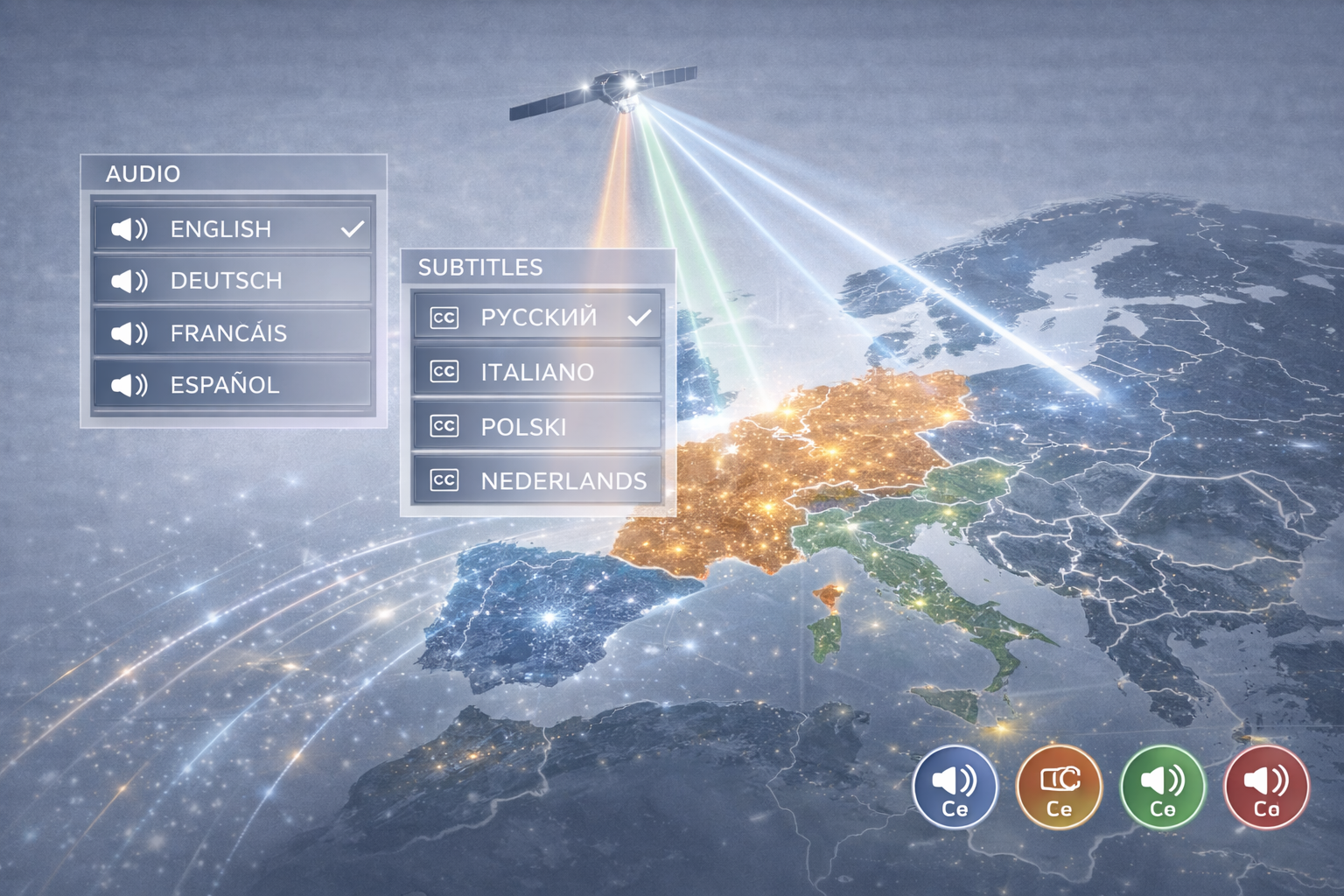
Audio tracks and language selection
Many European channels provide multiple audio tracks for the same program. Viewers can select their preferred language without changing channels.
This flexibility allows broadcasters to serve diverse audiences with a single feed.
The role of subtitles and captions
Subtitles remain one of the most effective multilingual tools. They support language learners, expatriates, and viewers in shared or quiet environments.
Consistent subtitle quality is essential for trust.
Cultural adaptation beyond language
True multilingual adaptation goes beyond translation. Broadcasters adjust references, tone, and presentation to match cultural expectations.
This sensitivity prevents misunderstanding and strengthens connection.
Regional feeds and scheduling
Some broadcasters offer regional versions of channels with tailored language mixes and schedules. This approach balances efficiency and local relevance.
Viewers receive familiar content without fragmentation.
Technology supporting multilingual delivery
Modern broadcast systems support multiple audio streams, subtitle layers, and metadata. These technologies enable seamless language switching.
Technology simplifies complexity for the viewer.
Why consistency builds trust
Multilingual features must work reliably. When language options are predictable and stable, viewers feel respected and confident.
Consistency transforms inclusion into habit.
Reality Check
Multilingual broadcasting succeeds when language options feel natural, not optional or unreliable.
Final Verdict
European broadcasters adapt for multilingual audiences by combining technology, cultural awareness, and consistency. Their approach keeps television inclusive, trusted, and relevant across languages and borders.