How Live Football Reached Every European Home
Estimated reading time: 18 minutes.
Live football did not become a European home habit overnight. It became familiar through repetition. Week after week, season after season, the same simple promise returned. A kickoff time. A shared moment. A feeling that something important is happening right now, and you are either part of it, or you are missing it. This is the story of how live football reached everyday living rooms across Europe, and why that change reshaped the way people use television, timing, and attention.
Quick Context
This article is the first piece in a five-part series about live football and European media habits. The focus here is not on teams or results. The focus is on routines. How viewing became a household rhythm. How scheduling became cultural. And why the live element turned football into a weekly anchor for modern media life.
- From Stadium Event to Home Ritual
- Why Live Football Feels Different
- How Broadcasts Taught Viewers How to Watch
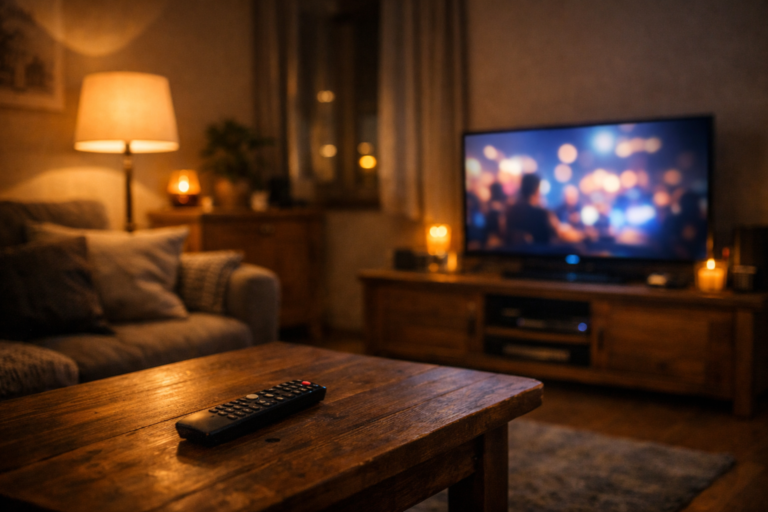
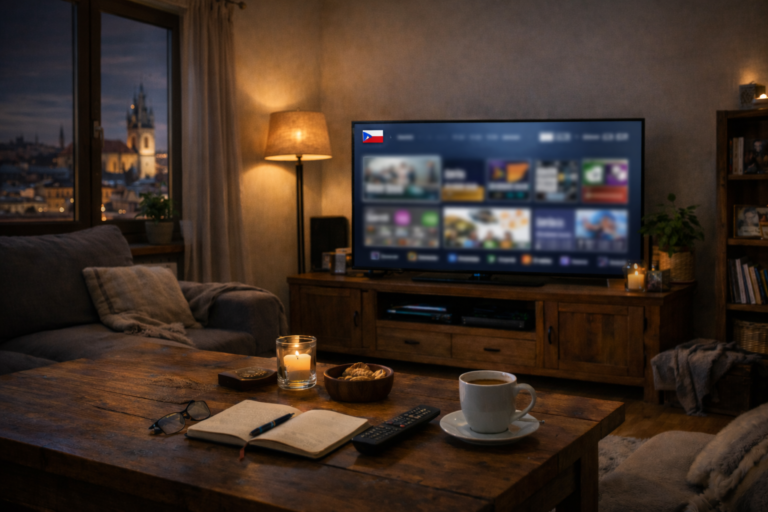
- The Living Room as a Shared Public Space
- How Schedules Built Habit
- The Sound of Football at Home
- Second Screens Did Not Replace TV, They Changed It
- Football as Identity, Not Just Entertainment
- What Football Reveals About Modern Attention
- Reality Check
- Final Verdict
- Share and Reflect
- Frequently Asked Questions
From Stadium Event to Home Ritual
For most of football history, the match was a physical event. You traveled to it. You stood in weather. You listened to the crowd for clues. You relied on distance and noise to understand what was happening. The match lived inside a place.
When football began to enter homes regularly, something subtle changed. The match stopped being only a place. It became a time. Not just a ninety minute contest, but a household appointment. And that shift matters, because time is easier to repeat than travel.
A stadium visit is special. A home broadcast can become routine. Routine is where culture forms. Once football became reliable on screens, it started to behave like other household habits. Dinner times. Weekend plans. Family presence. Even the quiet decision of whether the living room belongs to conversation or to the match.
The most important part of this transition is not technology alone. It is accessibility. A home broadcast lowered the cost of participation. If the match is in your room, you do not need transport, tickets, or a specific social group to belong. You only need the habit of turning it on.
When an event becomes a habit, it stops being optional entertainment. It becomes part of how a week feels.
Why Live Football Feels Different
People often explain football’s home power with loyalty. They say fans care, so they watch. That is true, but it is incomplete. Plenty of people care about many things and still skip them. Live football creates a different pressure. The pressure of now.
A replay can be paused. A highlight can be summarized. A finished match can be reduced to a scoreline. A live match cannot be safely compressed in the same way, because the meaning is still forming. The story is still open. The tension is real because the future is unknown.
This is why live football reached homes and stayed there. It offers a rare kind of attention experience. In modern media, most content can wait. Live football demands a choice. Either you show up at the moment, or you accept that you will arrive late.
That choice shapes behavior. It shapes evenings. It shapes weekends. It shapes group chats and family plans. Even people who claim they do not care about football often notice when the household atmosphere changes. The volume rises. The mood shifts. The room becomes alert.
The live element also reduces distraction in a strange way. People multitask with many shows. They pause. They scroll. They leave and return. With live football, leaving carries risk. You may miss the moment everyone talks about tomorrow. That fear of missing the moment is one of the strongest engines in modern attention.
How Broadcasts Taught Viewers How to Watch
Football arriving in homes required more than a camera. It required a language. Home viewers do not have stadium context. They need framing. They need repetition. They need cues that make the match understandable at a distance.
Over time, broadcasts developed a familiar grammar. Wide shots to show shape. Close shots to show emotion. Replays to make the invisible visible. On screen graphics to anchor time and score. Studio segments to turn a match into a larger narrative.
This grammar did something important. It standardized football for mass audiences. If you watch one league or another, the match may differ, but the viewing logic stays similar. That similarity lowers the learning curve. It makes football portable across borders. A household can follow matches from different countries and still feel at home in the broadcast experience.
Broadcasters also built anticipation. Pre match coverage makes the match feel like an occasion. Post match discussion makes it feel like an event that continues after the final whistle. That extension is crucial, because it keeps football present in daily life even when the ball is not moving.
When a household starts watching regularly, those broadcast rhythms become familiar like a theme song. You recognize the tone before you even focus. It is one reason football can take over a room quickly. The broadcast language signals that this is different from ordinary television. It is live. It is social. It matters now.
The Living Room as a Shared Public Space
A living room is private, but when football is on, it behaves like a public space. People perform their reactions. They comment. They argue. They predict. They complain about decisions. They celebrate loudly, as if someone beyond the walls can hear.
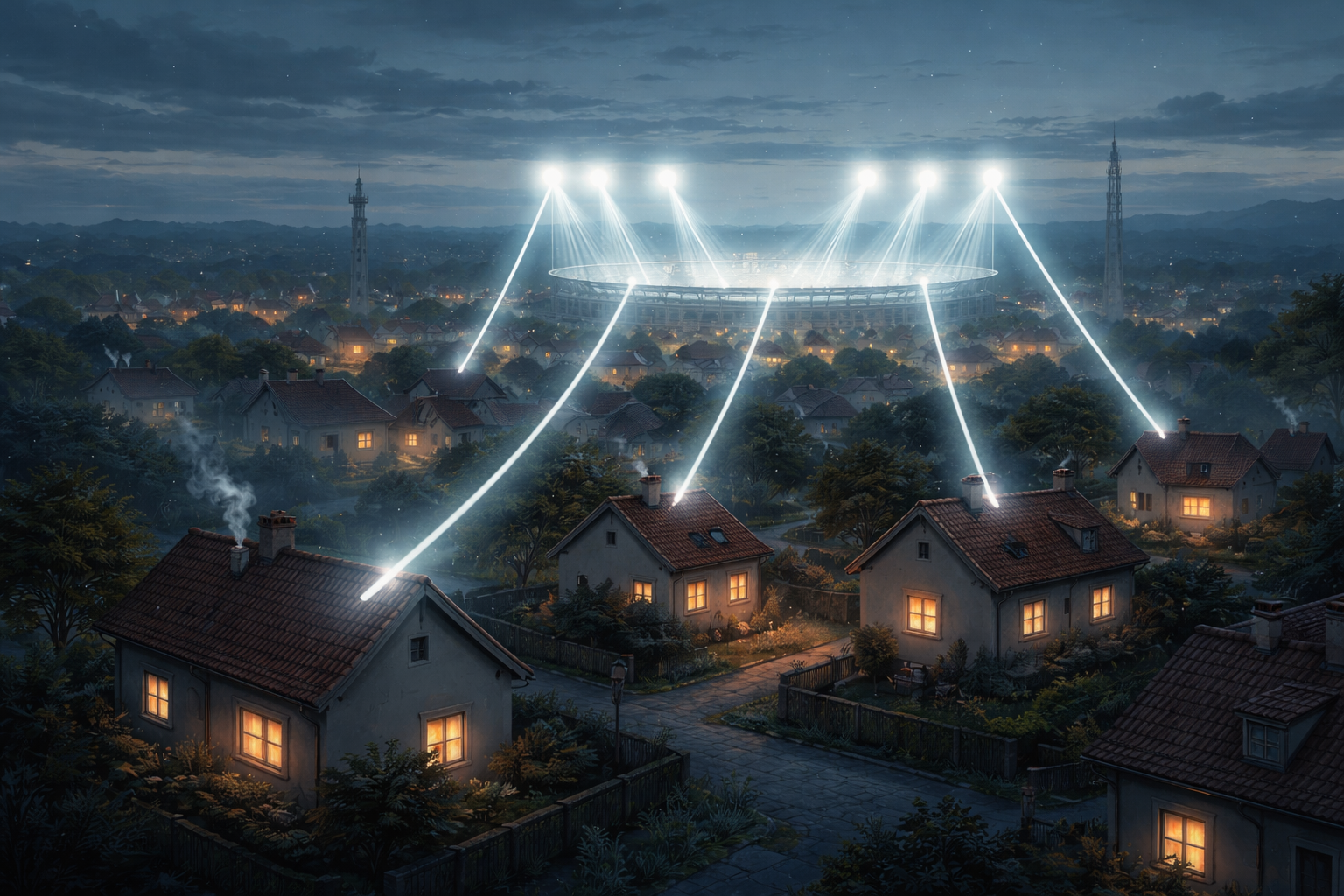
This is one of football’s strangest powers. It turns private homes into synchronized theaters. Across a city, thousands of rooms react within the same seconds. That synchronization creates community without physical contact.
The household dimension also changes who participates. In a stadium, participation is limited by travel, cost, and social context. In a home, participation can be casual. Someone can sit for ten minutes, then return later. Someone can watch while cooking. Someone can join only for the second half.
This flexibility expands the audience. It creates layers of fandom. Not everyone in a home is a dedicated supporter, but many become familiar through exposure. Familiarity is a powerful builder of belonging. You may not own a jersey. You may not memorize lineups. But if football is present in your environment repeatedly, it becomes part of your cultural background.
How Schedules Built Habit
The most underrated reason football reached European homes is scheduling. Habit needs predictability. It is hard to build a routine around chaos.
Over time, football calendars became one of the most reliable entertainment structures in modern life. Seasons return. Weekends repeat. European evenings develop patterns. Even people who do not track every match learn a basic rhythm. There is a time when football happens, and when it happens, the household may change.
Predictable scheduling does not only help viewers. It helps households negotiate space. If everyone knows when the match is, plans can form around it. Meals move earlier or later. Social visits become match visits. Families split rooms. The calendar becomes a silent organizer of domestic life.
This is why live football is different from random viral content. Viral content arrives unexpectedly. Football arrives on schedule. And because it arrives on schedule, it can be integrated. Integration is what makes it last.
The Sound of Football at Home
If you want to understand football in European homes, do not start with images. Start with sound. The crowd is constant. The commentator voice is steady. The whistle is a sharp punctuation. The moments of silence can feel tense. The sudden roar can wake an entire building.
Sound carries emotion faster than visuals. Many people experience football partially through sound even when they are not looking. A person in the kitchen can hear the match change. A neighbor can sense the building shift. A child can learn the emotional rhythm of the game without understanding tactics.
This audio presence is one reason football can dominate a home. It leaks into other activities. It makes the match difficult to ignore. And because it is live, the sound feels connected to real time. You are not listening to a recorded drama. You are listening to something unfolding now.
Second Screens Did Not Replace TV, They Changed It
Modern viewing often includes a second screen. A phone for updates. A chat for reactions. A quick search for context. Some people assume this weakens football’s power. In practice, it often strengthens it.
The main screen becomes the shared stage. The second screen becomes the social layer. Together, they create a richer feeling of participation. You are not only watching. You are reacting with others. You are seeing what others saw. You are confirming that the moment mattered.
This matters especially in Europe, where football is tied to local identity and regional rivalries. Conversation is part of the experience. Second screen behavior keeps the conversation alive during quiet parts of the match. It also pulls casual viewers deeper, because a live chat can make a slow game feel socially active.
The result is not that football becomes background noise. The result is that football becomes a live social object. It is something people hold together. A match becomes a shared reference point in real time. That shared reference is the raw material of culture.
Football as Identity, Not Just Entertainment
Football reached European homes because it does more than entertain. It expresses identity. Local. Regional. National. Sometimes even personal.
Identity content behaves differently from ordinary content. People do not consume it only for pleasure. They consume it to feel aligned. To feel represented. To feel part of a story larger than the day.
In many households, football is a family tradition. A parent teaches a child a club. A grandparent repeats stories. A scarf becomes a symbol of memory, not merchandise. When football becomes part of family identity, the home broadcast becomes a transmission of culture, not just a way to pass time.
This is why football is unusually resilient. Trends change quickly. Algorithms shift. New platforms appear. But identity habits persist. If a match is part of who you are, you will keep finding ways to watch it. The home is where identity habits are strongest, because the home is where routines are built and repeated.
What Football Reveals About Modern Attention
Modern media often trains people to consume alone. Personalized feeds. Individual headphones. Separate screens. Football pushes in the opposite direction. It gathers attention. It pulls people into shared focus, even if they disagree about what they are seeing.
This is one of the deepest reasons football reached European homes. It solves a modern problem. The problem of fragmented attention. A household can be in the same room and still be in separate worlds. A live match can temporarily unify the room.
That unity does not always feel calm. It can be loud. It can be tense. It can be chaotic. But it is shared. Shared attention is rare. Rare things become valuable.
If you want to understand why live football continues to dominate, do not start with technology debates. Start with this human fact. People still want moments that feel collective. Football offers that, at scale, on schedule, with emotion built in. When something offers all three, it naturally finds its way into homes.
Reality Check
Live football did not reach European homes only because screens improved. It reached homes because it fits how people build routines. Predictable timing creates habit. Live uncertainty creates attention. Shared viewing creates community. When those three align, football becomes more than content. It becomes a weekly structure that households adapt around.
Final Verdict
Final Verdict
Live football reached every European home by turning a stadium event into a repeatable domestic ritual. Broadcast language made matches easy to follow from a distance, predictable schedules turned viewing into habit, and the live element created a powerful sense of shared time. Over years of repetition, football became less like optional entertainment and more like a weekly anchor that organizes attention, conversation, and household rhythm.
Share and Reflect
If this article helped you notice how live sports can shape everyday routines, share it with someone who enjoys the human side of media.
Article link: ARTICLE_URL
Frequently Asked Questions
Why did live football become a home habit instead of a stadium only experience?
Because home viewing is easier to repeat. Stadium attendance is special, but it is limited by cost, travel, and time. When football became reliably available at home, it turned into a weekly routine that households could build around.
What makes live football feel more important than replays?
Live matches carry real uncertainty. The outcome is still open, so attention feels urgent. Replays can be paused or summarized, but live football creates a fear of missing the moment that everyone will talk about.
Did second screens reduce attention on football?
Often the opposite. The main screen remains the shared stage, while phones add the social layer through reactions, context, and conversation. Together, they can make the live experience feel more collective.
Is football’s home presence mostly about technology?
Technology helped, but routine explains more. Predictable scheduling, familiar broadcast patterns, and the social nature of live viewing are what made football settle into households as a stable habit.