Why Sports Broadcasting Remains Central in German Speaking Europe
Estimated reading time: 12 minutes
Across Germany, Austria, and Switzerland, sports broadcasting continues to occupy a central position in television culture. Despite the growth of digital platforms and on-demand viewing, live sports remain deeply embedded in how audiences engage with television.
This central role is not accidental. It is the result of long-standing viewing habits, cultural importance, and a broadcasting structure built around reliability and shared experience.
This article explores why sports broadcasting remains essential in German speaking Europe and why it continues to shape television in 2026.
Table of Contents
- Sports as a shared cultural experience
- Live broadcasting and real time connection
- Why sports anchor television schedules
- Trust in established sports broadcasters
- National leagues and regional identity
- Sports broadcasting and advertising stability
- Why digital growth has not replaced television
- Frequently Asked Questions
Sports as a shared cultural experience
In German speaking countries, sports are more than entertainment. Major matches are collective events watched simultaneously by millions of viewers.
This shared experience reinforces television’s role as a social space where audiences come together at the same moment.
Live broadcasting and real time connection
Live sports create immediacy. Viewers want to experience events as they happen, without delay or spoilers.
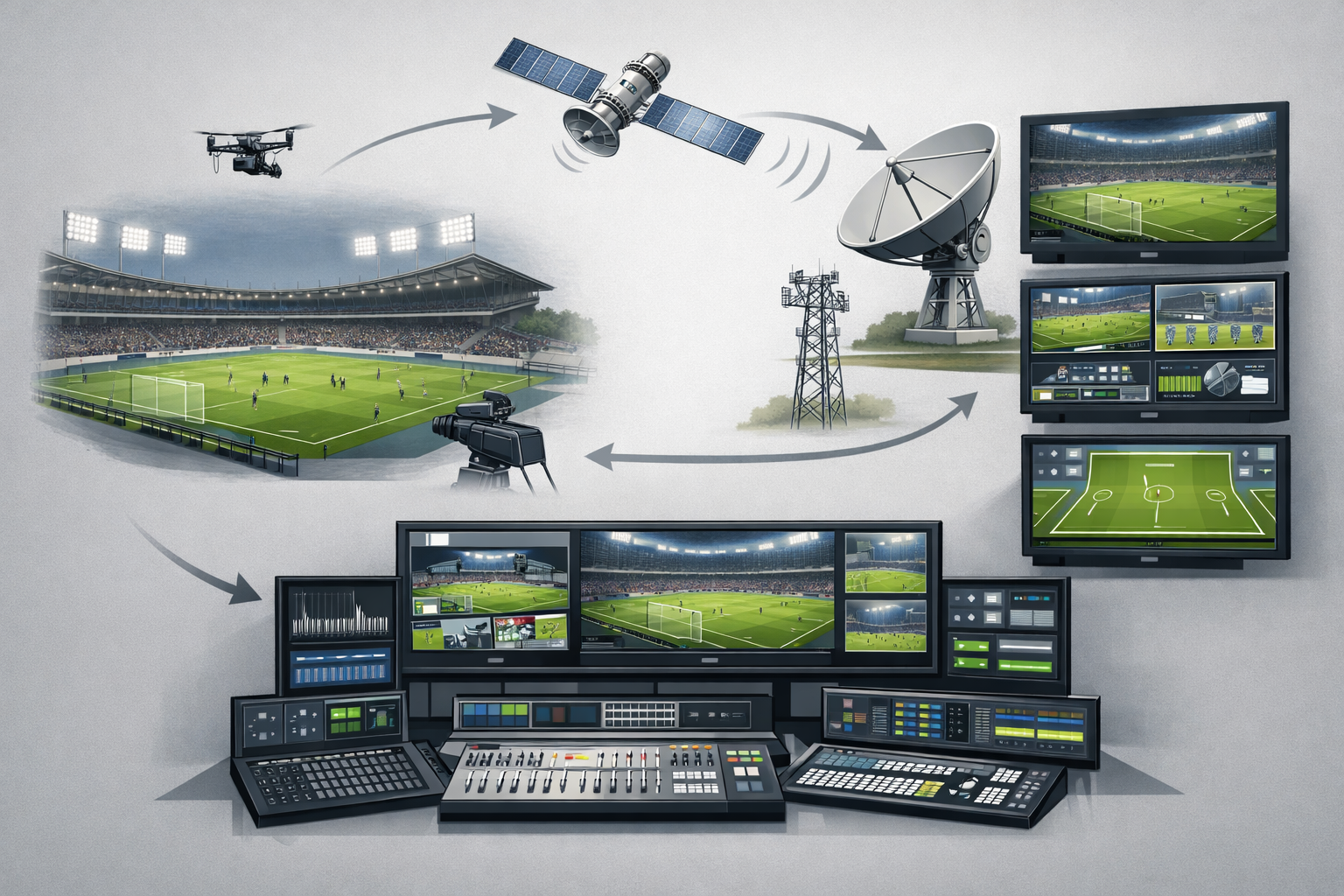
Television remains the most reliable medium for delivering real time sports at scale.
Why sports anchor television schedules
Sports programming provides fixed points in weekly schedules. Viewers organize evenings and weekends around known match times.
This predictability strengthens habitual viewing patterns.
Trust in established sports broadcasters
Audiences in Germany, Austria, and Switzerland place high trust in established sports broadcasters. Consistent presentation and reliable coverage build long-term confidence.
Trust keeps viewers returning to the same channels season after season.
National leagues and regional identity
Domestic leagues and national teams play a strong role in regional identity. Television coverage connects viewers to local clubs and national narratives.
This emotional connection strengthens the relevance of sports broadcasting.
Sports broadcasting and advertising stability
For broadcasters, sports deliver predictable audiences. Advertisers value live sports because viewers are less likely to skip or delay viewing.
This economic stability supports continued investment in sports coverage.
Why digital growth has not replaced television
Digital platforms complement sports broadcasting but do not replace it. Television offers scale, reliability, and shared timing that streaming alone cannot fully match.
In 2026, television remains the primary stage for major sports moments.
Frequently Asked Questions
Why is sports broadcasting still important in German speaking Europe
Sports broadcasting remains important because it delivers live shared experiences that connect large audiences at the same time.
Do viewers in Germany still prefer live sports on television
Yes. Live television offers reliability, immediacy, and a trusted viewing environment for major sports events.
Has streaming reduced the importance of sports TV channels
Streaming has expanded access but has not replaced traditional sports broadcasting, especially for major national and international events.
Why do advertisers value sports broadcasting
Sports attract predictable and engaged audiences, making them one of the most stable environments for advertising.
Will sports broadcasting remain relevant after 2026
As long as live sports matter culturally, broadcasting will continue to play a central role in European television.