German Channels on Astra 19.2 Frequency Guide 2026
Estimated reading time: 14 minutes.
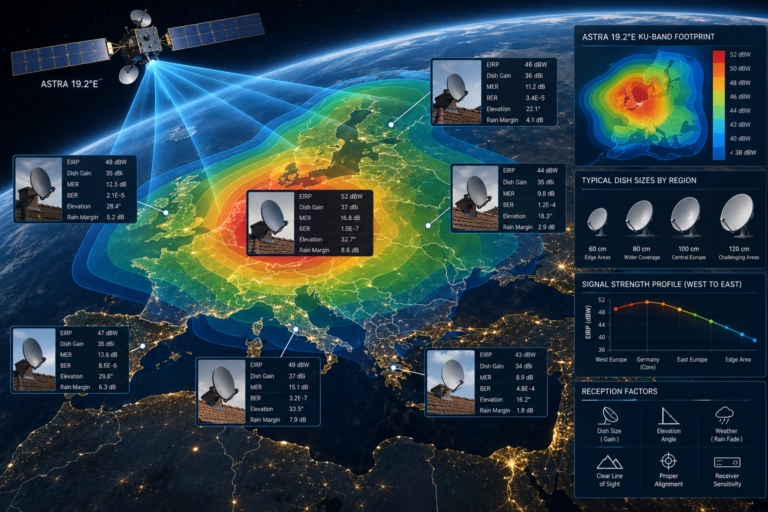
Astra 19.2 remains one of the most important satellite positions for viewers who want to receive German television channels across Europe. For many households in Germany Austria Switzerland and surrounding regions this satellite location provides access to a large selection of public and private broadcasters.
Understanding how German channels broadcast on Astra 19.2 frequencies is essential for stable reception. Many reception problems are not caused by the satellite itself but by incorrect scanning settings or outdated frequency information inside the receiver.
Quick Context
This guide explains how German television channels are transmitted on Astra 19.2 satellite in 2026 and how viewers can understand the frequency structure used by satellite receivers during channel scanning.
- Why Astra 19.2 is important for German TV
- How satellite frequencies work
- Understanding satellite transponders
- Common German channels on Astra
- How receivers scan frequencies
- Dish alignment and signal stability
- Typical Astra 19.2 frequency structure
- Reality Check
- Final Verdict
- Frequently Asked Questions
Why Astra 19.2 is important for German TV
The Astra satellite cluster located at the orbital position 19.2 degrees east has served as the primary distribution platform for German television for many years. Broadcasters rely on this position because it covers a large geographic area across Europe.
Millions of households use satellite dishes aligned toward Astra 19.2 in order to receive national broadcasters regional channels and international programming. For viewers this means a single satellite position can provide dozens of channels without requiring cable infrastructure.
Satellite broadcasting also allows channels to maintain consistent signal quality. Once the dish is aligned correctly viewers typically receive stable reception regardless of their local television network infrastructure.
How satellite frequencies work
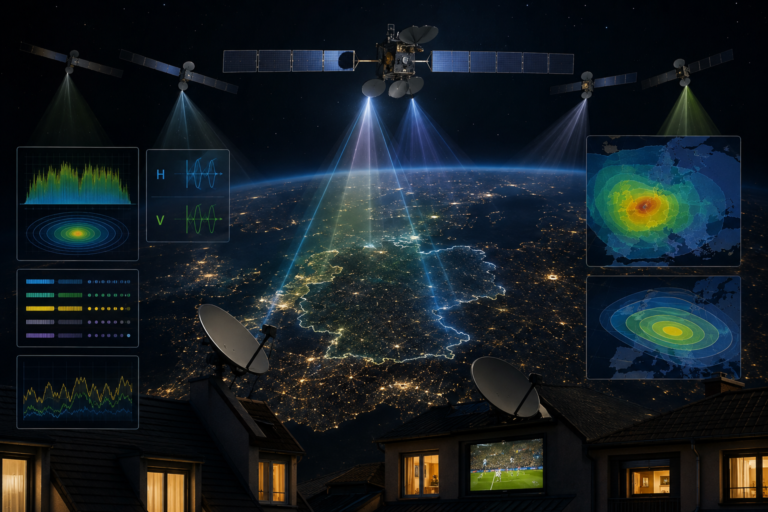
Satellite television relies on radio frequencies transmitted from satellites orbiting above the earth. Each channel is not broadcast individually but grouped together inside frequency blocks known as transponders.
When a receiver scans the satellite it searches through multiple frequencies to locate these transponders. Each frequency contains several television channels compressed together within a digital transport stream.
This structure allows broadcasters to efficiently transmit many channels at the same time while maintaining signal stability.
The receiver simply reads the frequency information and extracts the individual channels contained inside each broadcast stream.
Understanding satellite transponders
A satellite transponder acts as a relay system in space. It receives a signal from the broadcaster and then retransmits that signal back toward Earth across a wide coverage area.
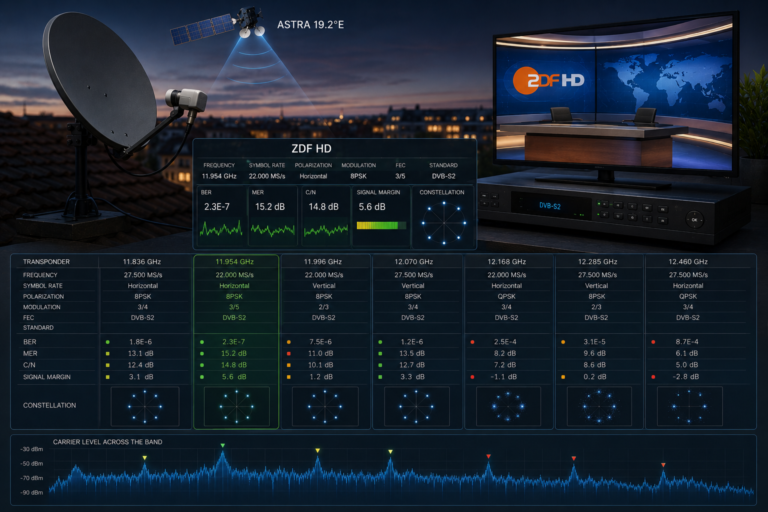
Each transponder operates at a specific frequency and polarization direction. These parameters help receivers distinguish between different signal groups during scanning.
For example some transponders operate using horizontal polarization while others use vertical polarization. The receiver automatically adjusts the LNB settings to match these parameters while searching for channels.
When a receiver identifies a transponder it then loads the full list of channels contained within that frequency block.
Common German channels on Astra
Astra 19.2 carries a wide range of German television networks including public broadcasters private channels and specialized programming services.
Public broadcasting networks remain among the most widely received channels. These stations provide news documentaries educational programs and national events.
Private broadcasters also rely heavily on Astra distribution. Entertainment series films reality programs and sports broadcasts are commonly transmitted through these networks.
Because of this variety Astra has become one of the most important satellite positions for German speaking viewers.
How receivers scan frequencies
Satellite receivers locate channels by scanning the list of available frequencies assigned to the Astra satellite. During a scan the receiver attempts to lock onto each frequency and detect whether a valid signal is present.
If a signal is detected the receiver reads the data table transmitted by the satellite. This table contains the names and technical identifiers of the channels within that stream.
Once the receiver finishes scanning all available frequencies it builds a channel list that viewers can navigate through their remote control.
This process usually takes only a few minutes depending on the receiver model and scanning mode.
Dish alignment and signal stability
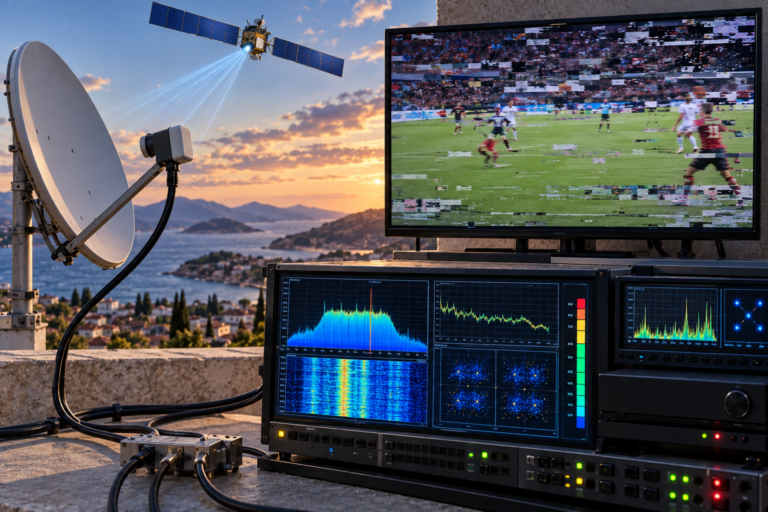
Satellite signal quality depends heavily on correct dish alignment. Even small positioning errors can reduce signal strength and prevent certain frequencies from being received correctly.
The dish must face the Astra orbital position precisely while the LNB angle must match the polarization used by the satellite transmission.
When alignment is correct viewers typically experience very stable reception. Weather conditions rarely affect modern satellite signals except during extreme storms.
Most signal problems are therefore related to alignment or outdated scanning information rather than satellite transmission itself.
Typical Astra 19.2 frequency structure
| Frequency range | Content type | Transmission purpose |
|---|---|---|
| Low band frequencies | Public broadcasters | National programming distribution |
| Mid band frequencies | Private entertainment channels | Commercial television networks |
| High band frequencies | Specialized and thematic channels | Additional content distribution |
| Mixed frequency blocks | Regional and international channels | Expanded viewing options |
Reality Check
Most reception issues related to German channels on Astra 19.2 occur because of incorrect receiver scanning settings or dish alignment rather than satellite transmission problems.
Final Verdict
Final Verdict
Astra 19.2 continues to be the central satellite platform for German television broadcasting in Europe. Understanding how frequencies and transponders operate helps viewers maintain reliable reception and quickly resolve common scanning issues.
Frequently Asked Questions
| Question | Answer |
|---|---|
| What satellite position carries most German channels | Astra located at 19.2 degrees east is the primary satellite used for German television broadcasting. |
| Why are some channels missing after scanning | Missing channels usually occur when the receiver uses outdated frequency lists or when the dish alignment is slightly incorrect. |
| Do all German channels use the same frequency | No channels are grouped inside different transponders each operating on separate frequencies. |
| Does weather affect Astra reception | Modern satellite signals are stable but severe storms may temporarily reduce signal quality. |