Why Total TV Looks Better Late At Night
Estimated reading time: 8 minutes.
- Total TV picture quality depends on clean signal decoding.
- Late-night stability often comes from better signal margin.
- Signal quality matters more than signal strength.
- LNB temperature behavior can affect HD reception.
- Receiver synchronization improves when BER is lower.
- Environmental noise can become less active late at night.
- The broadcast may be the same, but reception conditions improve.
- Why It Is Usually Not A Bitrate Change
- Signal Quality Makes The Picture Feel Cleaner
- Signal Margin Improves Stability
- LNB Temperature Behavior Late At Night
- Lower Electrical Noise Around The Receiver
- Receiver Decoding And BER Recovery
- Technical Comparison Table
- How To Make Total TV Stable All Day
- Reality Check
- Final Verdict
- FAQ
Why It Is Usually Not A Bitrate Change
When Total TV looks better late at night, many viewers assume the channel is being transmitted with better picture quality. That is usually not the real reason.
A satellite broadcast does not normally change quality just because fewer people are watching. Traditional satellite delivery is different from internet streaming. The signal is transmitted from the satellite to all receivers inside the coverage area at the same time.
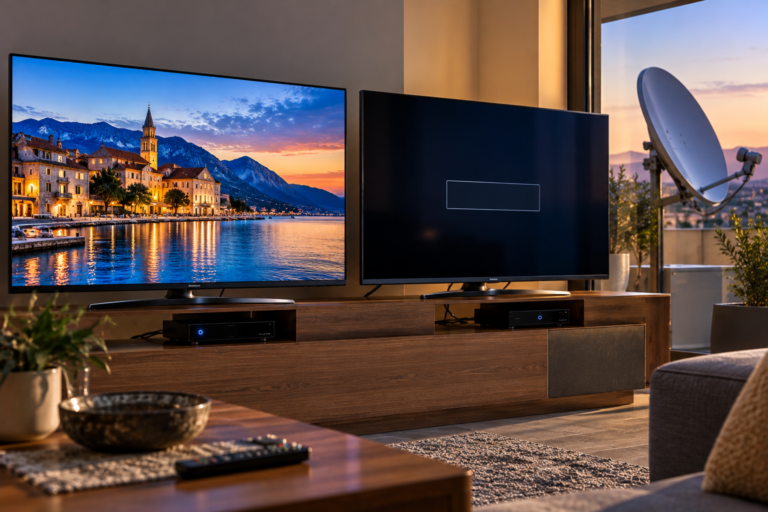
So if the picture looks cleaner late at night, the improvement is usually caused by the local reception system. The receiver is decoding the same broadcast more cleanly because fewer errors are reaching the tuner.
Signal Quality Makes The Picture Feel Cleaner
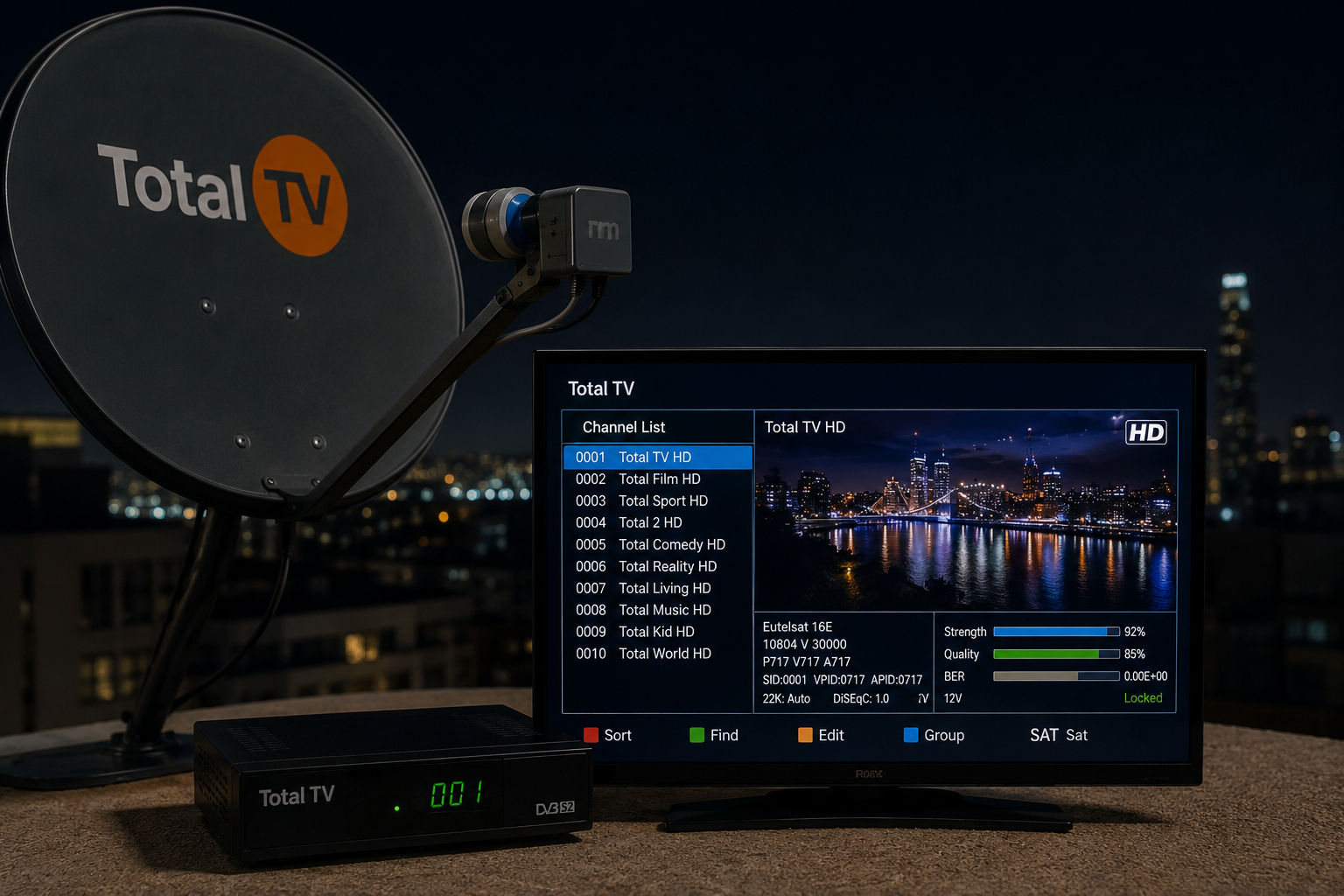
Signal strength only tells you how much RF energy reaches the receiver. Signal quality tells you how clean and usable that signal is.
This difference matters a lot with Total TV HD channels. A receiver can show strong signal strength while the picture still freezes or loses detail. The problem is not always weak signal power. It is often weak signal quality.
Late at night, small improvements in quality can reduce BER and help the receiver rebuild the video stream more accurately. When fewer packets are damaged, the picture looks smoother and more stable.
Signal Margin Improves Stability
Signal margin is the reserve between your current signal quality and the minimum level needed for stable decoding.
A system with strong margin can handle small changes in weather, temperature, and local noise. A system with weak margin may work normally for most of the day, then start showing problems when conditions become slightly worse.
Late at night, the installation may gain a small amount of usable margin. That small improvement can make a big difference on HD channels because DVB-S2 transmissions need cleaner decoding conditions.
LNB Temperature Behavior Late At Night
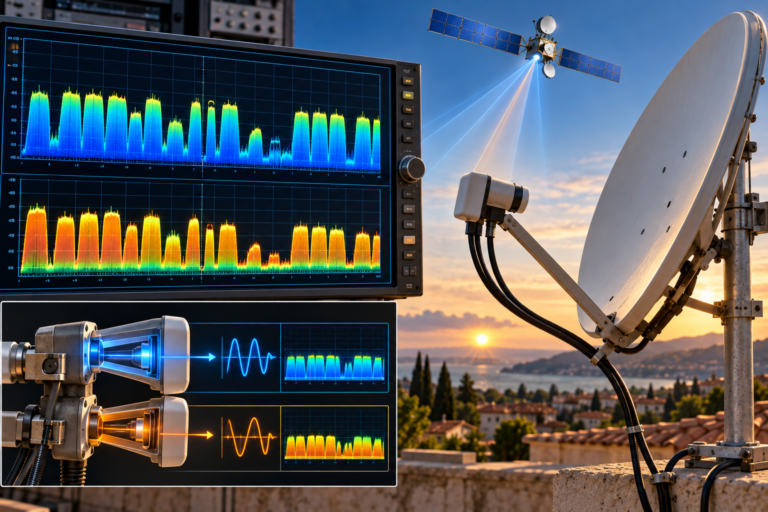
The LNB is one of the most important parts of the satellite system. It receives the reflected signal from the dish and converts it into a frequency range the receiver can process.
During the day and early evening, the LNB may be affected by heat. Heat can slightly change oscillator behavior inside low-quality or aging LNBs. This may create frequency drift, which makes receiver synchronization harder.
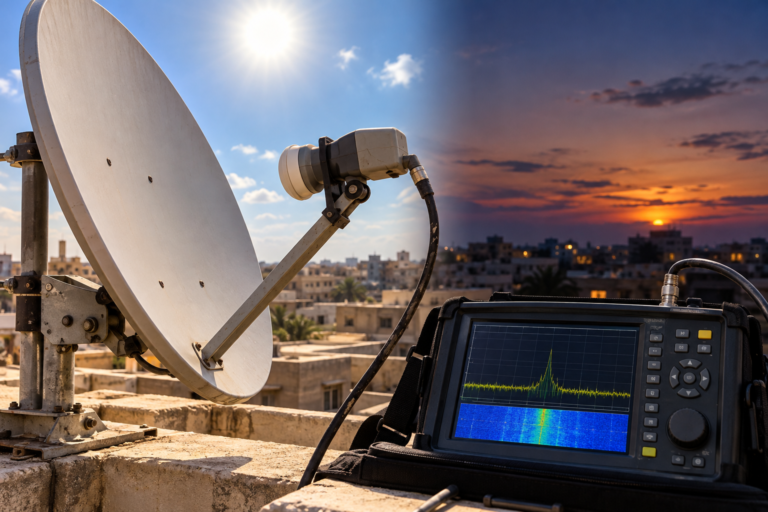
Late at night, temperatures usually become more stable. The LNB may operate with less drift and cleaner frequency conversion. This helps the receiver maintain lock more easily, especially on demanding HD channels.
Lower Electrical Noise Around The Receiver
Evening hours are often busy inside homes. More televisions, routers, LED lights, chargers, and power supplies are active. These devices can create small amounts of electrical noise.
A healthy satellite installation should reject most of this noise. However, weak shielding, poor connectors, old cables, or marginal signal quality can make the system more sensitive.
Late at night, fewer devices may be active. Local electrical noise can become lower. If the installation is already close to the decoding threshold, this reduction can make Total TV channels look more stable.
Receiver Decoding And BER Recovery
A satellite receiver does more than display channels. It constantly locks the signal, corrects errors, rebuilds the transport stream, and synchronizes audio and video.
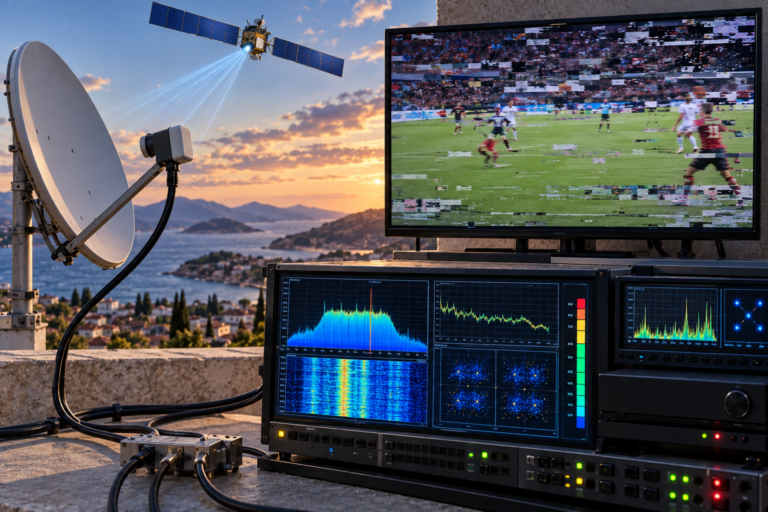
When BER rises, the receiver works harder. If the errors become too frequent, the image may freeze, pixelate, or lose smooth motion.
Late at night, if the signal becomes cleaner and BER drops, the receiver has less correction work to do. This can make the same channel appear sharper and more stable even though the original broadcast has not changed.
Technical Comparison Table
| Factor | Evening Conditions | Late Night Conditions |
|---|---|---|
| Signal margin | May be close to threshold | Often more stable |
| LNB behavior | Possible heat-related drift | More stable temperature |
| Electrical noise | More household devices active | Usually lower activity |
| BER | Can increase on weak systems | Often lower and steadier |
| Receiver decoding | More correction pressure | Easier synchronization |
| Viewer experience | Freezing or softness possible | Cleaner and smoother picture |
How To Make Total TV Stable All Day
The goal is not to wait until late at night for better reception. The goal is to build enough signal margin so Total TV remains stable at any time.
Start by checking signal quality, not just signal strength. Then fine-tune dish alignment using the weakest or most sensitive transponders. Small movements can improve quality more than expected.
Check the LNB skew angle carefully. Poor skew can reduce polarization separation and weaken difficult channels. Also inspect outdoor connectors for moisture or corrosion because small cable losses can create unstable HD reception.
If the LNB is old or cheap, replacing it with a stable low-noise model can improve late-evening and daytime performance. Finally, make sure the receiver firmware is updated and avoid unnecessary splitters or poor-quality switches in the signal path.
Total TV usually does not look better late at night because the channel itself changes quality. It usually looks better because your receiver is decoding the signal with fewer errors. Better margin, lower BER, stable LNB behavior, and reduced local noise can all make the picture feel cleaner.
Total TV may look better late at night because reception conditions become more favorable. The broadcast is usually the same, but the receiving system becomes more stable. Lower noise, better LNB temperature behavior, improved signal margin, and easier receiver synchronization all help reduce errors. A properly optimized dish, healthy LNB, clean cable path, and strong signal quality can make that late-night stability available throughout the entire day.
FAQ
| Question | Answer |
|---|---|
| Does Total TV increase picture quality late at night? | Usually no. The improvement is mostly caused by better local reception stability. |
| Why does HD look sharper at night? | Lower BER and cleaner decoding can make HD channels appear smoother and clearer. |
| Can LNB temperature affect Total TV? | Yes. Heat can affect oscillator stability, especially in aging or low-quality LNBs. |
| Is signal strength enough for stable reception? | No. Signal quality and BER are more important for decoding stability. |
| Can household devices affect reception? | They can contribute to local noise if the cable shielding or installation quality is weak. |
| How can I improve Total TV all day? | Improve dish alignment, LNB skew, cable quality, connector condition, and overall signal margin. |