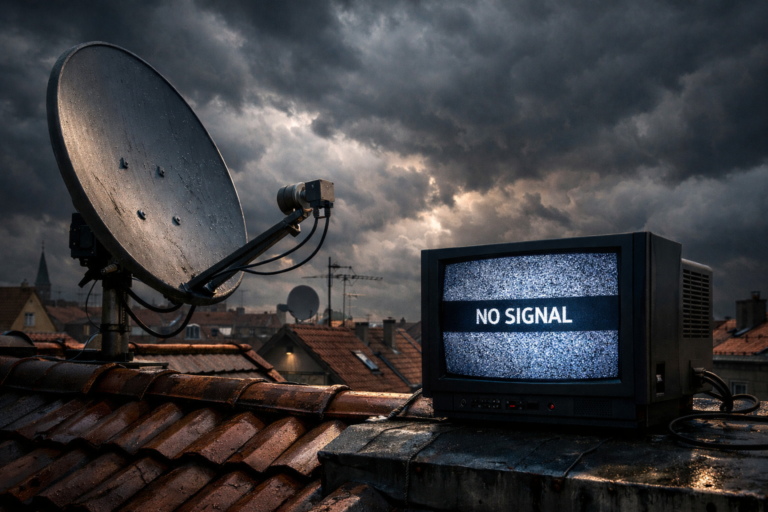
How Astra 19.2°E Delivers Stable TV Signals Across Europe

Estimated reading time: 17 minutes.
Stable television signals are something viewers expect but rarely think about. Across Europe, millions of households watch TV every day without interruptions. Behind that stability sits a carefully structured distribution system. Astra 19.2°E plays a central role in making this reliability possible across different countries and regions.
Quick Context
This article explains signal stability from a distribution perspective rather than a technical specification sheet.
What Stable TV Signals Actually Mean
Stability is not defined only by picture clarity.
It includes consistent audio, predictable channel availability, and minimal interruptions during everyday viewing. Astra 19.2°E supports this stability by reducing variability at the distribution level.
Centralized Satellite Distribution
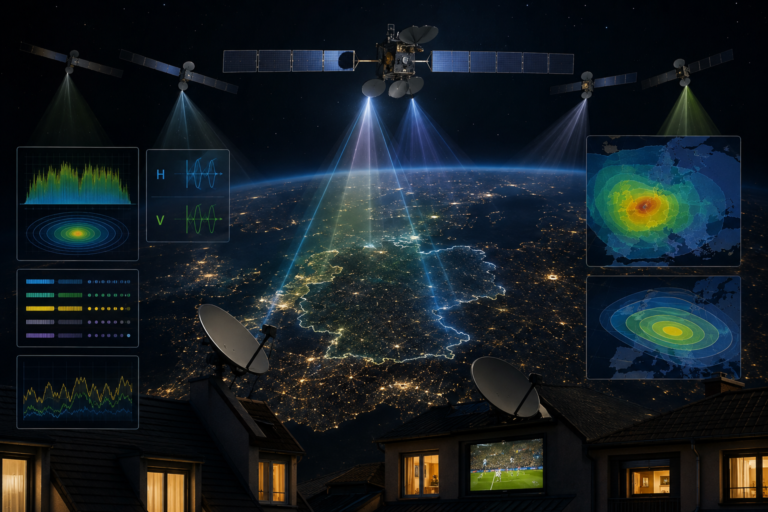
Satellite distribution delivers the same signal simultaneously to wide geographic areas.
Astra 19.2°E minimizes regional differences by providing a single, unified transmission source for broadcasters and platforms.
Signal stability starts long before it reaches the screen.
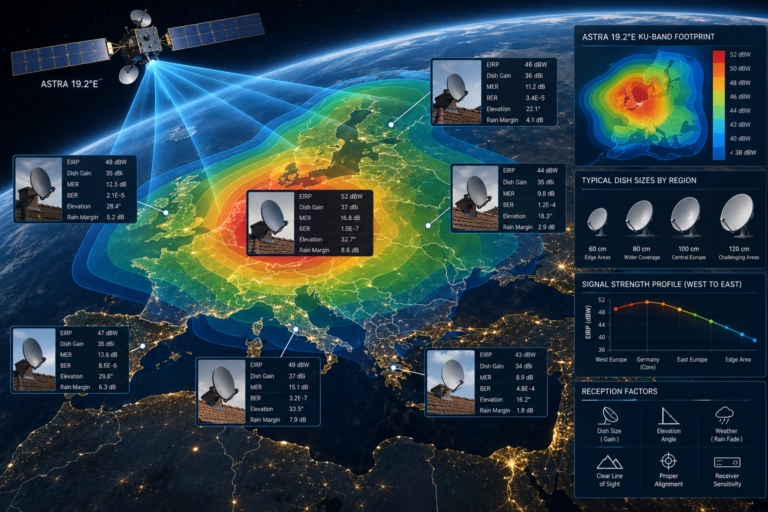
Consistent Coverage Across Regions
Europe includes dense cities, rural areas, and remote locations.
Astra 19.2°E maintains stable coverage across these diverse environments, avoiding reliance on fragmented local infrastructure.
Standardized Reception Systems
Millions of homes use similar reception equipment aligned to Astra 19.2°E.
This standardization simplifies signal delivery and reduces compatibility issues that could affect stability.
Continuous Monitoring and Control
Signal stability requires constant oversight.
Astra’s operations involve continuous monitoring to detect and correct anomalies before viewers notice disruptions.
Resilience During Demand Peaks
High demand periods test every distribution system.
Astra 19.2°E is designed to handle peak viewing times without degradation, preserving stable performance even when millions watch simultaneously.
Reality Check
Astra 19.2°E delivers stable TV signals across Europe because it centralizes distribution, standardizes reception, and maintains continuous operational control.
Final Verdict
Final Verdict
Stable television across Europe depends on infrastructure that viewers never see. Astra 19.2°E provides that foundation by delivering consistent, predictable signals that support everyday viewing without interruption.
Frequently Asked Questions
| Question | Answer |
|---|---|
| Why are satellite TV signals considered stable? | Because they avoid local network congestion and rely on centralized distribution. |
| Does Astra 19.2°E cover all of Europe equally? | Coverage is strongest in central and western Europe, but stability remains high across regions. |
| Can weather affect signal stability? | Severe conditions may cause brief issues, but overall stability remains high. |
| Why do broadcasters prefer stable satellite delivery? | Because it ensures predictable performance for large audiences. |