Why Technology Feels More Human in 2026
Estimated reading time: 12 minutes
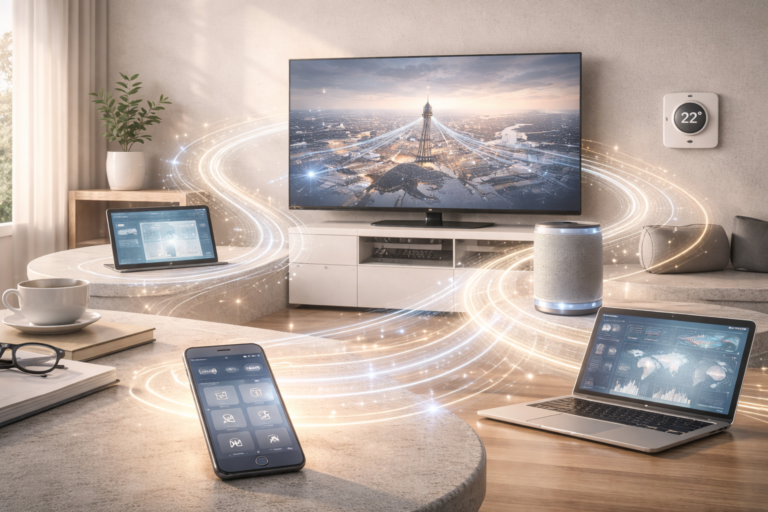
In 2026, technology no longer feels like a tool that demands attention. Instead, it behaves more like a quiet assistant that understands context, respects boundaries, and adapts to human rhythms. This shift has changed how people relate to digital systems.
Rather than forcing users to learn complex interfaces, modern technology increasingly learns from users. The result is a more natural interaction that feels human, even when no human is involved.
This article explores why technology feels more human in 2026 and what this change reveals about the future of digital experiences.
Table of Contents
What makes technology feel human
Technology feels human when it responds appropriately instead of constantly reacting. It understands when to act and when to remain silent.
This balance creates comfort and reduces the sense of being managed by machines.
Designing around behavior not features
Modern design focuses on how people behave, not on what technology can technically do. Features exist to support habits, not to showcase capability.
This approach results in systems that feel cooperative rather than demanding.
The role of intuition in modern systems
Intuitive technology requires fewer explanations. Users sense what to do based on context and familiarity.
This intuitive flow mirrors natural human interaction.
Reducing friction and cognitive load
Human centered technology minimizes decision fatigue. It removes unnecessary steps and simplifies choices.
By reducing mental effort, technology becomes easier to live with.
Consistency as a form of empathy
Consistency shows respect for users. Systems that behave the same way every day reduce stress and uncertainty.
In this sense, consistency becomes a quiet form of empathy.
Why users trust human centered technology
When technology feels human, users feel understood. Trust grows naturally through positive daily interactions.
This trust supports long term adoption and loyalty.
What this evolution means for the future
The future of technology is shaped by understanding rather than control. Systems will continue to adapt to human needs, not the other way around.
In 2026, feeling human is no longer optional for technology. It is expected.
Reality Check
Human centered technology does not imitate people. It respects how people think, feel, and focus.
Final Verdict
In 2026, technology feels more human because it prioritizes intuition, consistency, and empathy. The most successful systems are those that quietly align with human behavior rather than compete with it.