Astra 19.2 Signal Strength vs Quality Explained
Estimated reading time: 15 minutes.
Many users look at the signal bars on their receiver and assume that high signal strength means everything should work perfectly. Then suddenly, German channels freeze, disappear, or fail to decode even when the strength looks good. This creates confusion because the system appears to be working, but the channels are not stable.
The reason is simple but often misunderstood. Signal strength and signal quality are not the same thing. They measure completely different aspects of the signal. Understanding the difference between them is one of the most important steps in diagnosing Astra 19.2 reception problems correctly.
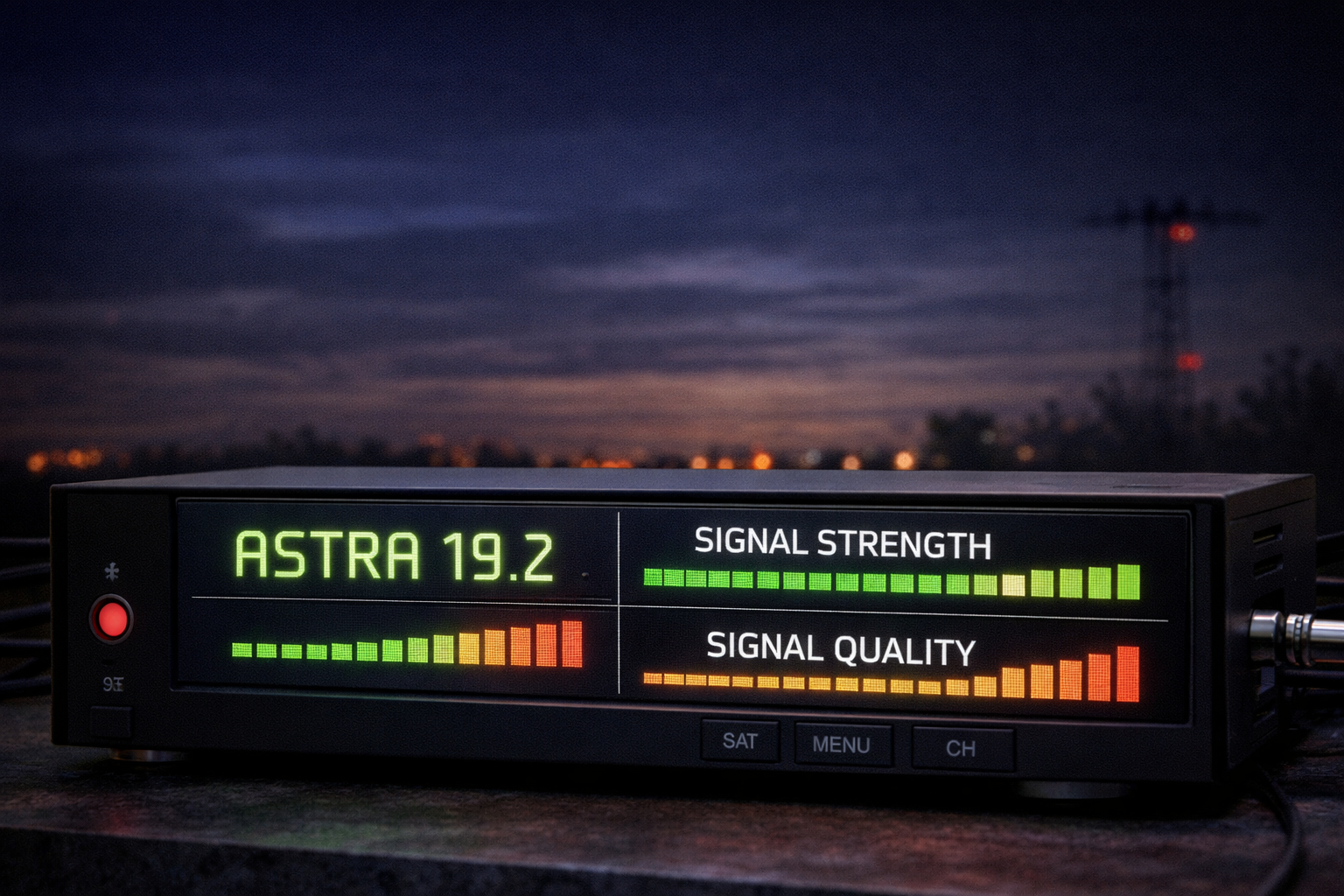
Signal strength shows how much RF signal reaches the receiver. Signal quality shows how clean and decodable that signal is. Stable reception depends on quality, not just strength.
- What signal strength really measures
- What signal quality actually means
- Why strength and quality can show different values
- Real world examples of strength vs quality
- Transponder behavior and signal readings
- Dish alignment effects on strength and quality
- LNB noise and signal cleanliness
- Analytical comparison table
- How to improve signal quality effectively
- FAQ
What signal strength really measures
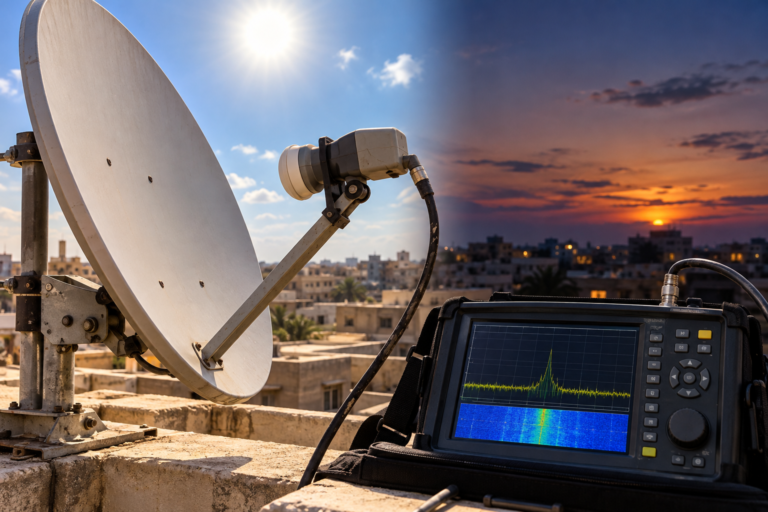
Signal strength represents the amount of radio frequency energy reaching the receiver tuner. It shows that the dish and LNB are capturing a signal from the satellite.
However, strength does not indicate whether the signal is usable. It simply confirms that something is being received. Even noise or interference can contribute to the strength reading.
This is why strength alone cannot guarantee that channels will work correctly.
What signal quality actually means
Signal quality measures how clean and error free the signal is. It reflects the receiver’s ability to decode the digital stream correctly.
Quality depends on factors such as signal to noise ratio and error correction performance. A high quality signal means stable decoding and smooth playback.
When quality drops, decoding errors increase, leading to freezing, pixelation, or signal loss.
Why strength and quality can show different values
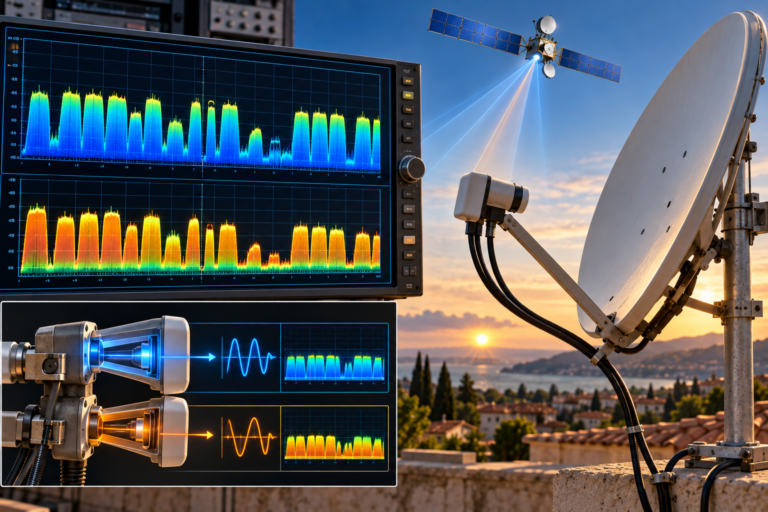
It is possible to have high strength but low quality. This happens when the signal is strong but contaminated with noise or interference.
For example, a misaligned dish may still receive strong RF energy, but the signal is not focused correctly. This reduces quality even though strength remains high.
Similarly, cable losses or LNB noise can degrade quality without significantly affecting strength.
Real world examples of strength vs quality
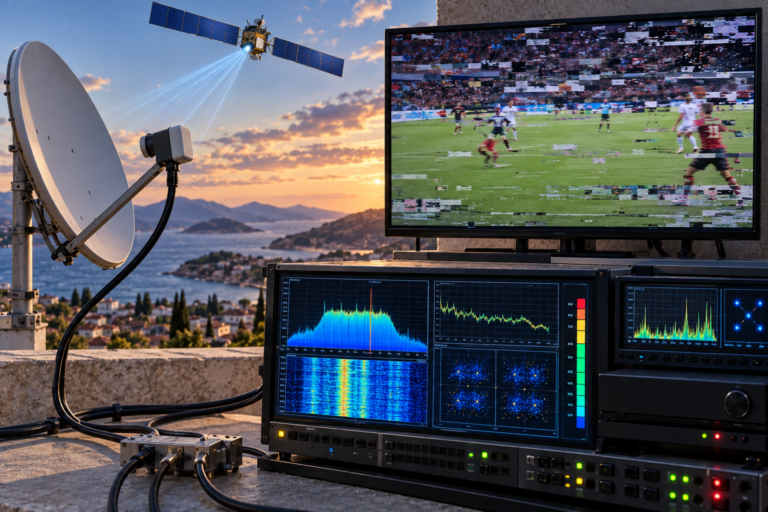
A common situation is when German channels freeze while the signal strength bar looks stable. This indicates a quality problem, not a strength issue.
Another example is when channels disappear during rain. Strength may drop slightly, but quality drops significantly, causing decoding failure.
Users often try to increase strength, but the correct solution is to improve signal quality.
Transponder behavior and signal readings
Different transponders have different signal characteristics. Some are easier to receive and show higher quality.
This is why some German channels work perfectly while others struggle. Each group depends on its transponder conditions.
Understanding this helps explain why signal readings vary across channels.
Dish alignment effects on strength and quality
Dish alignment affects both strength and quality, but its impact on quality is more critical.
A perfectly aligned dish focuses the signal accurately, improving quality significantly. A slightly misaligned dish may still show strong signal but poor quality.
Fine tuning alignment is one of the most effective ways to improve reception.
LNB noise and signal cleanliness
The LNB introduces noise into the signal during conversion. A low noise LNB improves signal quality.
A damaged or low quality LNB increases noise levels, reducing decoding performance.
Replacing the LNB can improve quality even if strength appears unchanged.
Analytical comparison table
| Condition | Signal Strength | Signal Quality | Result |
|---|---|---|---|
| Strong signal clean | High | High | Stable channels |
| Strong signal noisy | High | Low | Freezing and pixelation |
| Weak but clean signal | Low | Moderate | Channels may still work |
| Weak and noisy signal | Low | Low | No signal or failure |
| Unstable signal | Fluctuating | Fluctuating | Intermittent issues |
How to improve signal quality effectively
Start by focusing on dish alignment. Adjust the dish slowly to maximize quality rather than strength.
Check the LNB and replace it if necessary. A low noise LNB improves signal clarity.
Inspect cables and connectors for losses or interference.
Ensure there are no obstacles blocking the signal path.
Monitor quality readings on different transponders to identify weak areas.
Most users focus on signal strength, but quality is the real indicator of performance. Improving quality solves most reception problems.
Signal strength and signal quality are fundamentally different. Strength shows presence, while quality determines usability. For stable Astra 19.2 reception, always prioritize improving signal quality over increasing signal strength.
FAQ
| Question | Answer |
|---|---|
| What is more important strength or quality | Signal quality is more important for stable reception. |
| Can I have high strength and no signal | Yes. If quality is low, channels will not decode. |
| Why do channels freeze with good strength | Because signal quality is insufficient. |
| Does dish alignment affect quality | Yes. Proper alignment improves signal clarity. |
| Should I replace hardware to fix quality | Only after checking alignment and connections. |