Why Astra 19.2E Works but Some Transponders Fail
Estimated Reading Time: 8 minutes
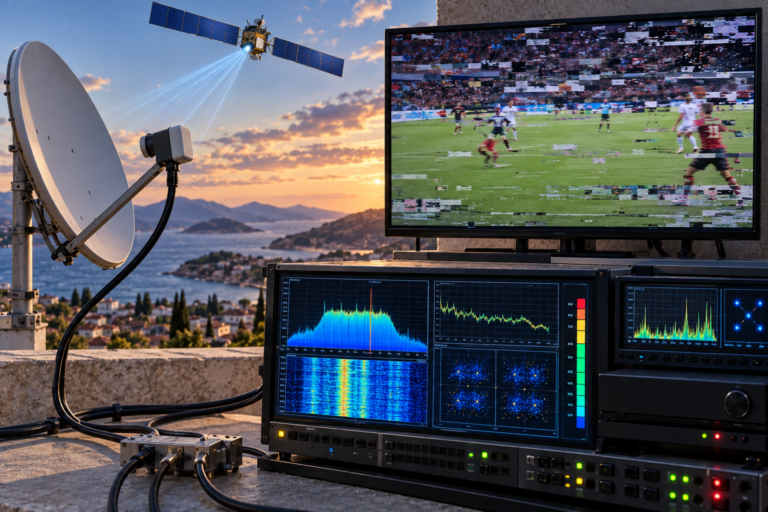
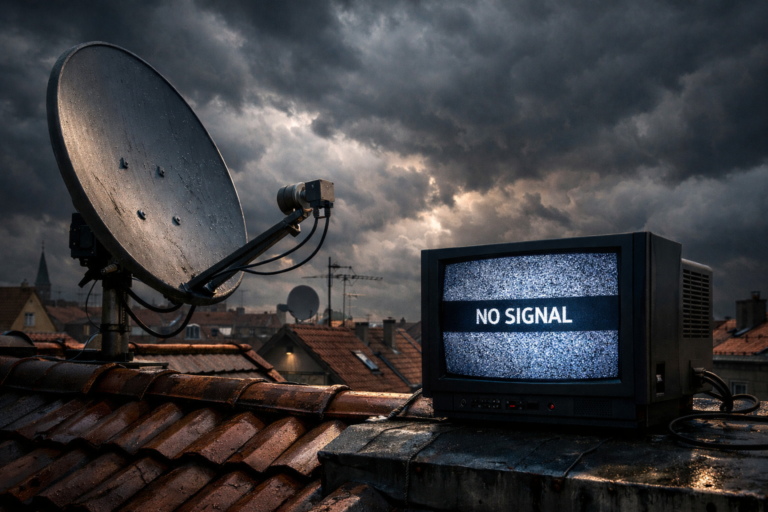
Your receiver finds Astra 19.2E, dozens of channels work perfectly, and the signal meter looks healthy. Then you switch to another group of channels and suddenly there is no lock, heavy pixelation or almost no quality. It can feel contradictory: if Astra is working, why would only a few transponders fail?
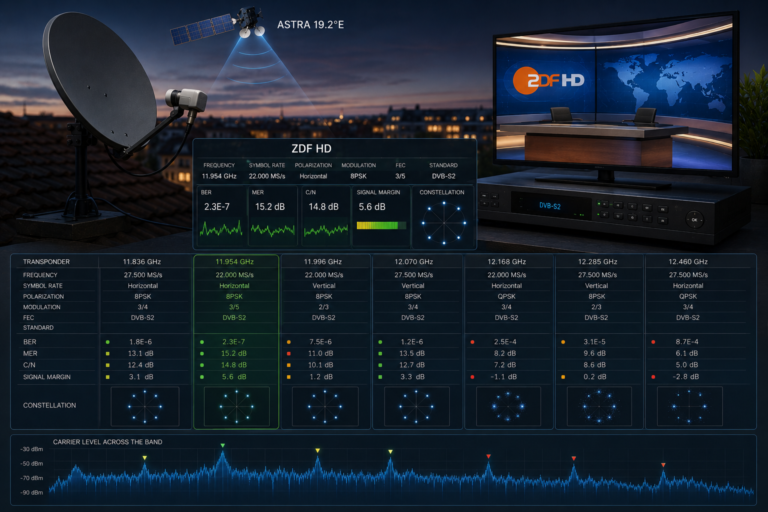
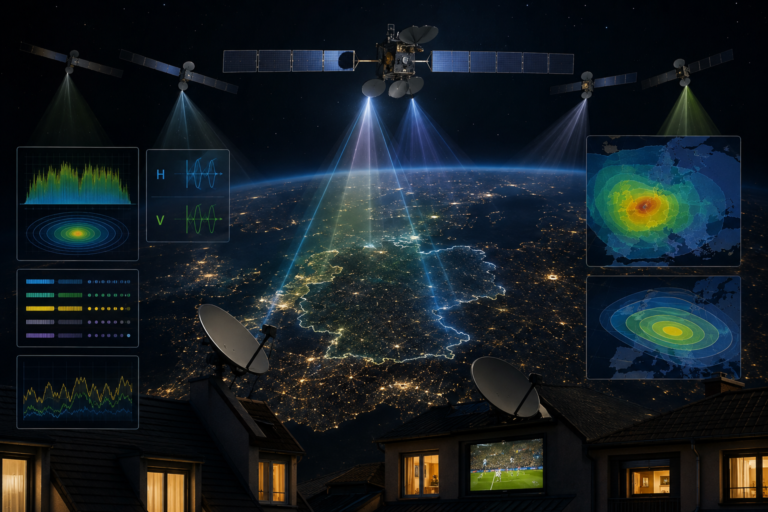
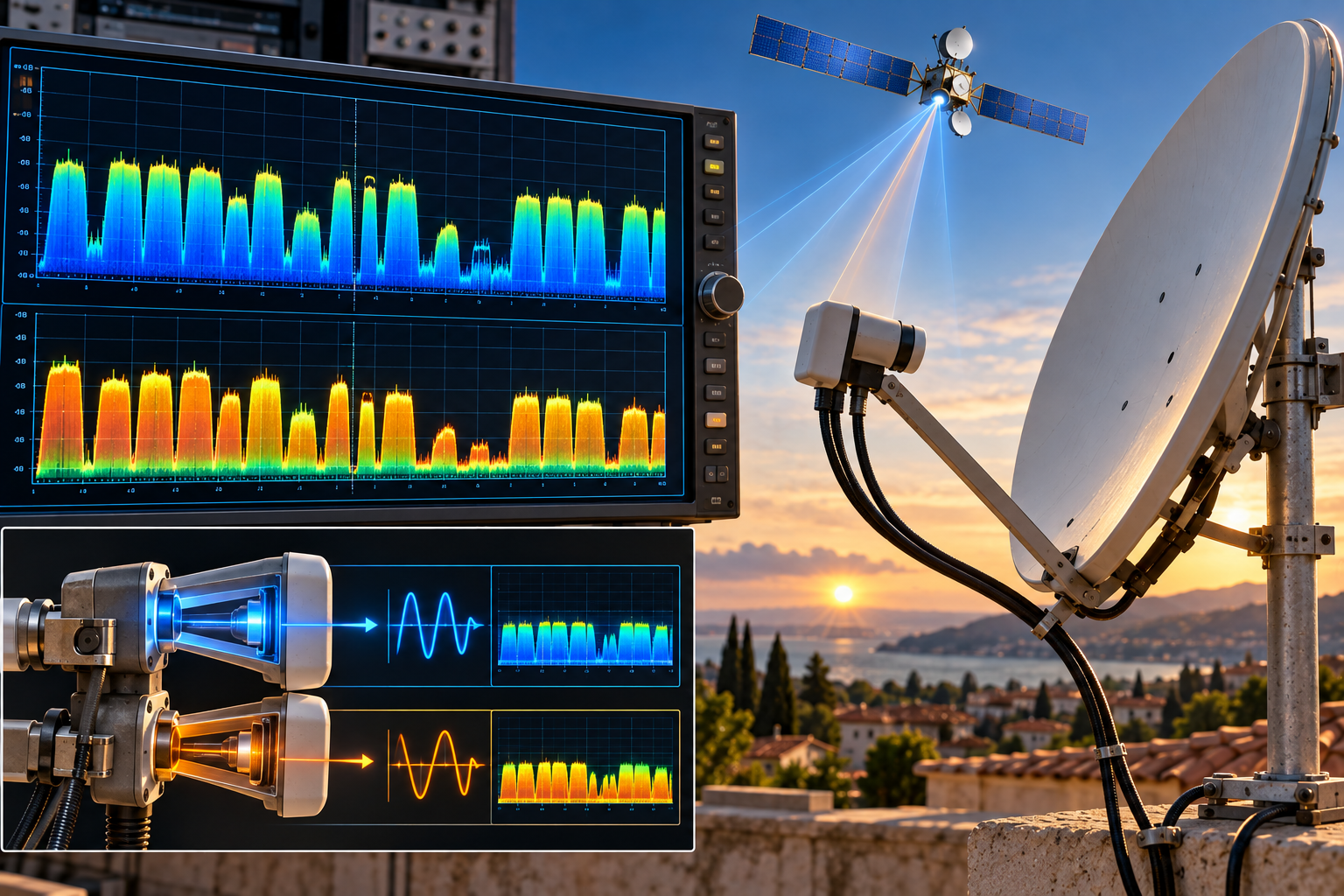
The answer is that a satellite position is not received as one single digital signal. Your dish receives many separate RF carriers using different frequencies, polarizations and transmission parameters. A reception system can therefore have enough margin for one carrier while another sits close to the decoding threshold. The pattern of the failed transponders can often reveal exactly where the problem is.
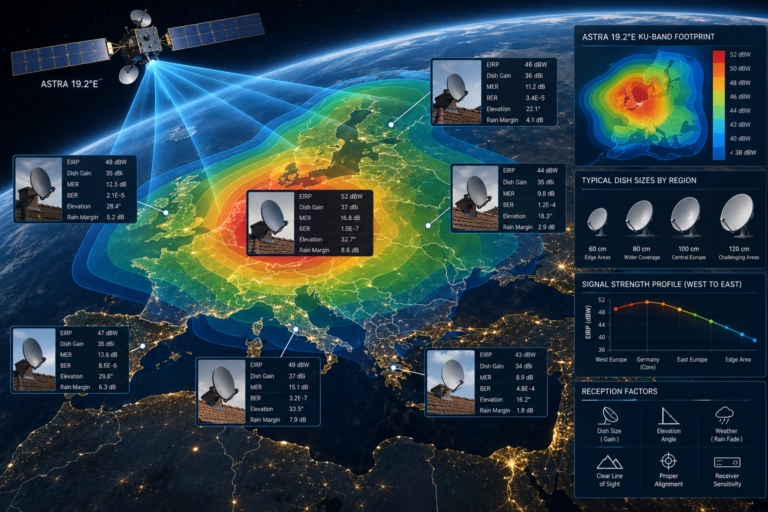
Astra 19.2E is an orbital neighbourhood used for European television distribution. SES continues to operate the 19.2°E TV position, and ASTRA 1P has been operational there since December 2024 with 80 transponders. For troubleshooting, the important point is simple: receiving one Astra carrier successfully does not prove that every carrier reaching your installation has the same usable margin.
- Astra 19.2E Is Not One Signal
- What a Transponder Means to Your Receiver
- Why One Carrier Can Have Less Margin
- Check Whether the Failures Share a Polarization
- Low Band vs High Band Can Reveal the Fault
- Why Frequency Matters in the Cable System
- A Slightly Misaligned Dish Can Hide the Problem
- DVB-S2, 8PSK and FEC Can Change the Threshold
- How an LNB Can Affect Only Some Transponders
- Multiswitches and Distribution Systems
- Why Weather Exposes the Weakest Carrier First
- Why Signal Strength Can Mislead You
- How to Diagnose Missing Astra Transponders
- Reality Check
- Final Verdict
- FAQ
Astra 19.2E Is Not One Signal
The first misconception to remove is the idea that your receiver either gets “the Astra signal” or it does not.
Astra 19.2E is an orbital position used to distribute many television and radio services. Those services are carried across multiple RF carriers. Your receiver tunes one carrier at a time according to parameters such as frequency, polarization, symbol rate and transmission standard.
That means a successful lock on one carrier proves only that the complete reception chain can recover that particular carrier under those conditions.
It does not prove that every other carrier has identical margin at the receiver input.
This is also why the phrase “Astra works” can be technically misleading during troubleshooting. The more useful question is: which Astra transponders work, and what do the failing ones have in common?
That change in thinking can turn a vague reception problem into a much more precise diagnosis.
What a Transponder Means to Your Receiver
In everyday satellite television terminology, viewers often identify a transponder by its frequency, polarization and symbol rate.
One carrier can transport a multiplex containing several television and radio services. If the receiver loses that carrier, every service transported within it may disappear together.
This creates an important diagnostic pattern.
If five channels suddenly fail and all five belong to the same carrier, it is usually more useful to investigate the carrier than to treat the five channels as unrelated failures.
If several missing channels share the same frequency and polarization, test the transponder as a single RF problem before troubleshooting each channel separately.
This is one reason satellite troubleshooting becomes much easier when you understand how Astra uses multiple transponders rather than treating every channel as an independent satellite transmission.
Why One Carrier Can Have Less Margin
Digital satellite reception depends on having sufficient usable signal quality above the decoding requirement of the transmitted waveform.
Two carriers received by the same dish do not necessarily have identical conditions at the receiver.
There can be differences in received power, transmission configuration, polarization performance, frequency-dependent losses and the amount of margin available before errors become uncorrectable.
Imagine Carrier A has comfortable margin. A small alignment error or a little extra cable loss may reduce its quality without producing any visible problem.
Carrier B may already have less margin. The same loss pushes it much closer to the digital threshold.
Carrier C may then fall below the threshold completely.
| Carrier Condition | Small Additional Loss | Likely Result |
|---|---|---|
| Large reception margin | Margin becomes smaller | Picture remains stable |
| Moderate margin | Approaches threshold | May remain stable until weather changes |
| Already near threshold | Crosses decoding limit | Pixelation, freezing or no lock |
This is the digital cliff in practice. The weakest carrier often reveals an installation problem long before stronger carriers do.
Check Whether the Failures Share a Polarization
When several Astra transponders disappear, one of the first useful checks is their polarization.
Satellite systems can use horizontal and vertical polarization to reuse spectrum efficiently. A universal LNB must select the appropriate polarization according to control from the receiver or distribution system.
In a conventional universal-LNB installation, receiver supply voltage is used to control polarization selection, commonly around 13 volts for one state and 18 volts for the other.
If something goes wrong with this control path, an entire group of transponders can be affected while the opposite polarization remains healthy.
Possible causes include a failing LNB, excessive voltage drop, damaged connectors, poor coaxial connections, receiver power-supply problems or a multiswitch fault.
LNB skew also matters because the receiving probe needs appropriate orientation relative to the incoming polarization.
Poor skew does not necessarily make one polarization disappear completely, but it can reduce cross-polarization isolation and lower the available quality margin.
If almost every failed transponder is horizontal while vertical carriers remain stable, or vice versa, that pattern is more informative than the total number of missing channels.
Low Band vs High Band Can Reveal the Fault
Universal Ku-band LNB systems also divide reception into different frequency bands.
The receiver typically uses a 22 kHz control tone as part of the selection between the LNB’s low-band and high-band operating modes.
This creates another useful troubleshooting pattern.
If transponders from one band work while carriers from the other consistently fail, the problem may not be dish pointing at all.
The LNB may not be switching correctly. The receiver may not be generating the required control signal correctly. A multiswitch or distribution component may also be preventing the expected selection.
This is why simply rotating the dish whenever channels disappear can make troubleshooting worse.
The antenna can already be pointed correctly while an electrical control problem prevents access to one section of the received spectrum.
Why Frequency Matters in the Cable System
Once the LNB converts the satellite signal to an intermediate frequency, that signal travels through coaxial cable to the receiver.
Coaxial attenuation is frequency dependent. In general, loss becomes greater toward the higher end of the satellite IF range.
On a short, good-quality cable this may not matter much.
On a long cable, ageing installation or distribution network with multiple connections, the difference can become significant.
Poor F-connectors add another potential source of loss and impedance discontinuity. Water ingress can make the problem worse and may produce frequency-dependent behaviour that looks surprisingly selective.
As a result, some transponders may arrive with enough quality while others are pushed close to failure.
An amplifier is not automatically the solution. Excessive gain can create its own problems, and amplification cannot reconstruct signal quality that has already been lost through noise, interference or poor antenna alignment.
A Slightly Misaligned Dish Can Hide the Problem
A dish does not need to be dramatically misaligned to create selective failures.
A small pointing error reduces antenna gain in the wanted direction.
Strong carriers may still have enough margin to work perfectly, creating the impression that the dish is correctly aligned.
Lower-margin carriers reveal the error first.
This is why aligning a dish using only a very strong transponder can sometimes produce misleading confidence.
A better procedure is to verify reception across several representative carriers and fine-peak the antenna using signal-quality measurements rather than simply maximizing an arbitrary strength bar.
Dish alignment should also include correct elevation, azimuth and LNB skew.
Mechanical issues matter too. A loose bracket, slightly bent reflector or mount that moves while its bolts are tightened can reduce the final margin even if the initial alignment appeared correct.
DVB-S2, 8PSK and FEC Can Change the Threshold
Not every Astra carrier uses the same transmission configuration.
Satellite television can use DVB-S or DVB-S2, different modulation schemes and different forward error correction configurations.
QPSK carries two raw bits per modulation symbol before coding overhead, while 8PSK carries three.
But modulation alone does not tell you whether a carrier will work at your installation. The complete modulation and coding configuration determines the required reception conditions.
DVB-S2 uses powerful LDPC and BCH forward error correction. This allows the receiver to correct many errors before they become visible.
Once the required decoding region is lost, however, error correction can no longer maintain a clean transport stream.
The result can change quickly from apparently perfect television to severe pixelation or complete loss of lock.
This is another reason one carrier can appear far more sensitive than another.
It is not because an HD channel automatically needs a stronger satellite signal. The relevant variables are the physical carrier parameters and the available RF margin.
How an LNB Can Affect Only Some Transponders
An LNB does more than amplify satellite signals.
It also converts Ku-band frequencies into the intermediate-frequency range used by the receiver and responds to polarization and band-selection controls.
Several LNB faults can therefore produce selective rather than complete failure.
Its local oscillator can become unstable. Internal switching can malfunction. Water ingress or ageing electronics can affect performance. Temperature can expose a marginal component that works correctly when cold but becomes unstable after heating.
Frequency drift is particularly interesting because one receiver may tolerate it better than another.
This can make the failure appear to be a receiver problem even though the LNB is contributing to the original instability.
A useful test is to compare several known transponders across both polarizations and bands rather than judging the LNB from a single working channel.
Multiswitches and Distribution Systems
Not every Astra installation connects one receiver directly to one universal LNB.
Apartment buildings, hotels and larger homes may use multiswitches or more complex distribution networks.
In those systems, selective failures can originate after the dish.
A particular polarization/band path can develop a fault while other paths remain operational. One output may have excessive loss. A connector can deteriorate. Powering or switching problems can also affect only part of the network.
This provides another useful diagnostic clue.
If the same Astra transponders fail on every receiver in the building, investigate shared infrastructure.
If only one outlet has the problem while other outlets receive those carriers correctly, the local cable run, wall outlet, connector or receiver path deserves closer attention.
Why Weather Exposes the Weakest Carrier First
Rain introduces additional attenuation into Ku-band satellite links.
A properly designed reception system includes enough link margin to tolerate ordinary variations without immediately losing service.
But if one carrier is already close to threshold because of dish alignment, cable loss, LNB performance or its received conditions, rain can push that carrier into failure first.
Other Astra transponders may continue working.
This creates the familiar complaint that “only some channels disappear when it rains.”
The weather may be the final trigger, but it does not necessarily mean weather is the only cause.
A marginal installation can turn moderate atmospheric attenuation into a visible failure that a healthier system would tolerate.
Why Signal Strength Can Mislead You
A receiver displaying 90% signal strength does not prove that every Astra transponder is being received correctly.
Consumer signal percentages are not standardized engineering measurements.
Strength may primarily reflect RF energy reaching the tuner rather than how reliably the wanted digital carrier can be decoded.
A receiver can therefore show substantial signal strength while reporting very poor quality or failing to lock the carrier entirely.
For meaningful troubleshooting, MER and BER are more useful.
MER indicates how cleanly the received modulation constellation can be distinguished. BER provides information about bit errors, although the measurement point matters because error rates before and after FEC represent different stages.
This is why signal quality matters more than signal strength when diagnosing selective Astra failures.
How to Diagnose Missing Astra Transponders
Do not start by replacing random components. First look for a pattern.
1. Write down several working and failing transponders.
2. Compare their frequencies, polarizations and symbol rates.
3. Check whether the failures are concentrated on horizontal or vertical polarization.
4. Check whether they are concentrated in one LNB band.
5. Verify that the receiver is using the correct tuning parameters.
6. Inspect F-connectors, coaxial cable and signs of moisture.
7. Compare reception directly at another outlet or receiver where possible.
8. Check LNB skew and fine dish alignment.
9. Measure MER and BER on both good and failing carriers with suitable equipment.
10. In multiswitch systems, determine whether the failure follows a particular band/polarization path or only one subscriber output.
The pattern usually narrows the problem faster than the signal-strength number.
| Failure Pattern | Areas Worth Investigating |
|---|---|
| Only one transponder fails | Carrier margin, tuning data, local interference or carrier-specific conditions |
| Several nearby frequencies fail | Frequency-dependent cable/LNB response or interference |
| Mostly one polarization fails | LNB switching, skew, receiver voltage, coax or multiswitch |
| Mostly one LNB band fails | 22 kHz control, LNB switching or distribution system |
| Weak carriers fail in rain first | Insufficient link margin, alignment, dish size or RF losses |
| One receiver fails but another works | Tuner/demodulator tolerance, receiver fault or marginal RF conditions |
| Only one wall outlet fails | Local cable, connector, outlet or distribution output |
Reality Check
Astra 19.2E working does not prove that every Astra transponder should have identical signal quality.
Different carriers can have different received margins and transmission configurations, while your own reception chain can introduce frequency, polarization and band-dependent losses.
However, do not assume that every weak transponder requires a different dish direction. Carriers from the same orbital neighbourhood are not normally individually aligned by moving the dish for each frequency. If one carrier is weak, the underlying issue may instead be overall pointing margin, polarization, LNB behaviour, cabling, switching or distribution.
As of 2026, 19.2°E remains an active SES television neighbourhood. ASTRA 1P entered commercial operation there in December 2024 with 80 transponders, reinforcing the position’s European broadcast capacity. Selective reception problems at a home installation should therefore be diagnosed at the carrier and RF-chain level rather than interpreted simply as “Astra is down.”
Final Verdict
If Astra 19.2E works but some transponders fail, the failed carriers are giving you diagnostic information.
Start by identifying what they share. The pattern may point toward one polarization, one LNB band, a frequency-dependent cable problem, insufficient dish alignment margin, an LNB fault or a particular DVB carrier that needs better signal quality than the installation currently provides.
Do not judge the complete system from the strongest working transponder, and do not assume a high receiver strength percentage proves correct reception.
A well-adjusted Astra installation should be evaluated across multiple representative carriers. When the weakest useful carriers have adequate MER and stable error performance, the entire system gains more margin against rain, temperature changes and normal component variation.
The key question is therefore not simply “Do I receive Astra?” It is “Which Astra carriers fail, and what do those carriers have in common?” That is where the real diagnosis begins.
Frequently Asked Questions
| Question | Answer |
|---|---|
| Why do some Astra 19.2E transponders work while others show no signal? | Different carriers can have different reception margins and transmission parameters. Your LNB, cabling, dish alignment, polarization switching or distribution system can also affect only part of the received spectrum. |
| Does one working Astra channel prove my dish is aligned correctly? | No. A strong carrier can remain usable despite a small pointing error. Testing several carriers, including lower-margin ones, gives a better picture of alignment quality. |
| Why are only horizontal Astra channels missing? | A polarization-related pattern can point toward LNB switching, receiver voltage, cabling, connectors, a multiswitch problem or poor LNB skew. Verify the actual polarization of several working and failing carriers before concluding. |
| Why does my receiver show high signal but no quality? | Signal strength can indicate RF energy without proving that the wanted digital carrier is being decoded. Incorrect tuning, insufficient MER, interference or demodulation problems can produce this symptom. |
| Can a bad LNB affect only a few frequencies? | Yes. LNB faults do not always cause complete failure. Oscillator instability, internal switching problems and frequency-dependent degradation can produce selective symptoms. |
| Can a coaxial cable make some Astra frequencies weaker? | Yes. Coaxial attenuation varies with frequency, and long or damaged cable runs can make differences more important. Poor connectors and water ingress can also produce selective problems. |
| Why do only some Astra channels disappear during rain? | The affected carriers may have less link margin before the rain begins. Additional rain attenuation then pushes them below the decoding threshold while stronger carriers remain usable. |
| Should I realign the dish for every weak transponder? | No. Transponders from the same orbital neighbourhood are not normally individually aimed. Fine alignment should optimize the antenna toward the orbital position while maintaining good performance across representative carriers. |
| Can DVB-S2 or 8PSK explain why one carrier fails? | Transmission configuration affects the required reception conditions. Modulation and FEC should be considered together with the actual MER and link margin rather than assuming that DVB-S2 or 8PSK alone is the cause. |
| What should I check first when several Astra channels disappear? | Identify the transponders carrying those channels and compare their frequency, polarization and band. The shared pattern often tells you which part of the reception system to investigate next. |